Glass fibre pencils are commonly used in modelling for cleaning locomotive wheels, commutators and other electrical...

Cart 0 Product Products (empty)
No products
Free shipping! Shipping
£ 0.00 Total
Product successfully added to your shopping cart
Quantity
Total
There are 0 items in your cart. There is 1 item in your cart.
Total products (tax incl.)
Total shipping (tax excl.) Free shipping!
Total (tax incl.)
Search Tips
Tips categories
Latest Tips
-
 What is a glass fibre pencil?Read more
 -
 Is ballast grey or brown?Read more
Ballast can be either colour. If you are creating a layout of a prototype line then you should try and stick as...
-
 What is a CCT van?Read more
The term CCT van stands for 'Covered Carriage Truck'. These Railway vans were designed specifically to carry motor...
-
 Are there any issues when combining track sections from different manufacturers?Read more
There can be some issues to consider when it comes to combining track sections from different manufacturers on the...
-
 How do I clean the wheels of my engine?Read more
One easy way is to get yourself a Peco cleaning kit containing a wire brush, wheel scraper, foam cradle and oil. The...

Which is the best building kit for the beginner model to start with, plastic or card?
When it comes to building kits for beginner model railway enthusiasts, both plastic and ready-cut and ready-printed card kits have their advantages and disadvantages.
Plastic kits are typically easier to work with and require fewer tools than card kits. Most plastic kits come with pre-moulded parts that are glued together with little or no trimming required, making them ideal for beginners who are new to model building. Additionally, plastic kits generally offer a wider range of models to choose from, which can be helpful for beginners who are still exploring their interests in the hobby.
Ready-cut and ready-printed card kits, on the other hand, can offer greater flexibility and customisation options than plastic kits. These kits typically come with printed sheets of cardstock that have been pre-cut to the correct size and shape, allowing builders to simply glue the parts together to create a model. This can be a great option for beginners who want to create unique models that are not available as plastic kits, or who want to experiment with customising their models.
Ultimately, the best choice between plastic and ready-cut and ready-printed card kits will depend on the individual's personal preferences and experience level. Beginners who want an easy-to-use and forgiving material may prefer plastic kits, while those who want more flexibility and creative freedom may opt for card kits. It's also worth noting that some model railway enthusiasts prefer to work with a combination of both materials, using plastic kits for some models and card kits for others.
Posted in: Kit building
Click here to receive the tips weekly in your mailbox. You can unsubscribe at any time.
Related products
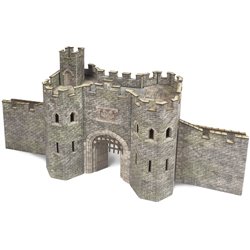
Castle Gatehouse
Price: £ 21.00Castle Gatehouse A beautiful gatehouse which are still seen today in historic...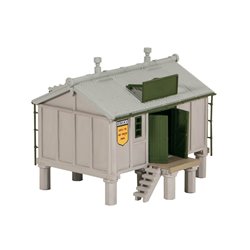
Provender (Goods) Store
Price: £ 31.10Provender (Goods) StoreMoulded plastic parts that require gluing together....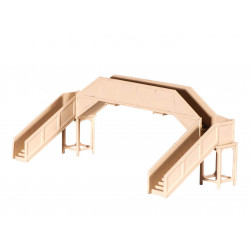
Concrete Footbridge
Price: £ 15.70Plastic kit to build an N gauge concrete footbridge. Requires assembly.
Related posts
-
 Do I need to wash my plastic kit?I personally wash all my plastic kits, I use warm soapy water (Washing up liquid) and a light rub over with a nail...
 - What is Milliput?Milliput is a two-part epoxy putty. There are two different colour rolls in a box when these are mixed together it...
- What modelling tools do I need to get started?Most modellers have an extensive tool kit, a tool for every eventuality. But when first starting a scalpel or a...
- How do I remove parts from the sprue?The short answer is carefully. The best way is with a sprue and plastic cutter but always be mindful of exactly...
- Do I need a cutting mat?It is not essential to have a cutting mat, but it is a good idea. It saves getting in trouble with your significant...