A track plan is essentially the blueprint or schematic that guides you in constructing your miniature railway system....

Cart 0 Product Products (empty)
No products
Free shipping! Shipping
£ 0.00 Total
Product successfully added to your shopping cart
Quantity
Total
There are 0 items in your cart. There is 1 item in your cart.
Total products (tax incl.)
Total shipping (tax excl.) Free shipping!
Total (tax incl.)
Search Tips
Tips categories
Latest Tips
-
 What is model railway track plan?Read more
 -
 How do I apply static grass?Read more
Static grass is best applied using a static grass applicator. There are several on the market and they can apply...
-
 Can I mix H0 and 00 engines?Read more
You can mix H0 et 00 engines as they run on the same gauge of track and use the same controllers with no problem...
-
 In soldering, what is tinning?Read more
Officially, tinning is the process of coating certain metals with a thin sheet of tin to prevent rust, in soldering,...
-
 What is an eggbeater drill?Read more
An 'eggbeater' is a type of hand drill so-called because its appearance resembles an egg whisk.Officially known...

How do I remove parts from the sprue?
The short answer is carefully.
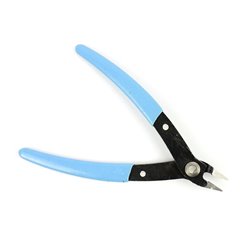
The best way is with a sprue and plastic cutter but always be mindful of exactly where you are cutting as it is all too easy to cut in to the model components if you are not familiar with the parts that make up the kit.
That is why you should always go through the instructions to see how the whole model fits together. I don’t know about other modellers, but I am guilty of not reading the instructions and cutting bits in the wrong place.
But when you have done it once, you don’t do it again. So hopefully you will never do it after reading this.
Click here to receive the tips weekly in your mailbox. You can unsubscribe at any time.
Related products
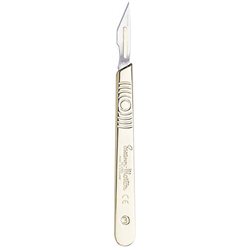
Professionnal scalpel No 3
Price: £ 12.25This handle is available for use with the small (No.3) fitment blades.
Related posts
-
 Do I need to wash my plastic kit?I personally wash all my plastic kits, I use warm soapy water (Washing up liquid) and a light rub over with a nail...
 - What is Milliput?Milliput is a two-part epoxy putty. There are two different colour rolls in a box when these are mixed together it...
- What modelling tools do I need to get started?Most modellers have an extensive tool kit, a tool for every eventuality. But when first starting a scalpel or a...
- Do I need a cutting mat?It is not essential to have a cutting mat, but it is a good idea. It saves getting in trouble with your significant...
- How do I fill holes in a model?There are many products on the market for filling holes: There are plastic putties straight out of the tube, there...