This really depends on what it is you plan to glue, most things can be glued straight from the bottle, but this will...

Cart 0 Product Products (empty)
No products
Free shipping! Shipping
£ 0.00 Total
Product successfully added to your shopping cart
Quantity
Total
There are 0 items in your cart. There is 1 item in your cart.
Total products (tax incl.)
Total shipping (tax excl.) Free shipping!
Total (tax incl.)
Search Tips
Tips categories
Latest Tips
-
 What is the best way to apply super glue (cyanoacrylate)?Read more
 -
 What does "DCC ready" mean?Read more
You may have noticed that in more recent years whenever you purchase a new locomotive that there is a little label on...
-
 What options do I have for motorising the waterwheel on a mill or the sails of a windmill?Read more
There are several options for motorising the waterwheel on a mill or the sails of a windmill on a model railway...
-
 What are the best tools to cut wooden parts such as planks for a period ship ?Read more
Wooden parts supplied with some kits can be quite thick and can offer significant resistance when a standard hobby...
-
 When airbrushing, should I use a thinner?Read more
When using an airbrush, there are a couple of reasons why modellers use thinners. Firstly, if they are using paints...

What are my options for adding sound to my layout?
Adding sound to your layout can significantly enhance the immersive experience. Here are several options you might consider:
Speakers: Connect speakers to your layout to play sounds. You can use standalone speakers or integrated ones, depending on the size and complexity of your setup. Ensure the speakers are placed strategically to provide the best audio experience. CD are available for sounds suitable a layout such as a busy station or trains in the countryside.
Sound Modules: Sound modules are specialised devices designed to generate and play specific sounds. They often come with pre-recorded sounds, but some allow you to upload your own audio files. You can trigger these sounds manually or automatically using sensors or controllers. The Train Tech sound capsules will fit in most engines and are motion activated, adding sound to DCC or analogue engines.
Arduino or Raspberry Pi: If you're into DIY projects and want more control over the sounds, you can use microcontrollers like Arduino or Raspberry Pi to generate and play sounds. There are plenty of tutorials and resources available online to guide you through the process.
DCC Systems and sound decoders: Digital Command Control (DCC) systems used in model railroading often have sound capabilities built-in or available as add-ons. These systems allow you to control trains and accessories while also integrating sound effects. Sound Decoders: Sound decoders are specialised devices that can be installed in model trains to produce realistic sounds such as engine revving, whistle blowing, and more. They can be programmed to respond to various commands and actions.
Bluetooth Speakers: Bluetooth speakers offer wireless connectivity, allowing you to stream sounds from a smartphone, tablet, or computer. This can be convenient if you want to change or update the sounds frequently.
Recordable Modules: Recordable sound modules allow you to record your own sounds and play them back on your layout. This gives you full customisation over the sounds you want to incorporate.
Consider your budget, technical expertise, and specific requirements when choosing the right option for adding sound to your layout. Experimenting with different methods can help you find the perfect solution for your needs.
Posted in: Model Railway
Click here to receive the tips weekly in your mailbox. You can unsubscribe at any time.
Related products
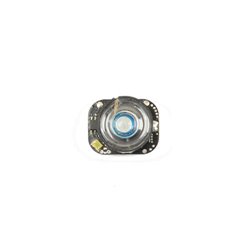
SFX+ Sound Capsule Goods Freight Sounds
Price: £ 50.00The goods shunting sound capsule can be hidden in a wagon and creates a...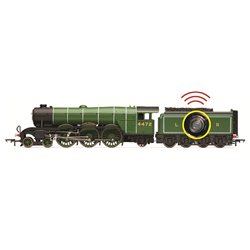
SFX+ Sound Capsule Steam Express Locomotive
Price: £ 50.00Sound capsules with battery and fitting guide Steam locomotive - including...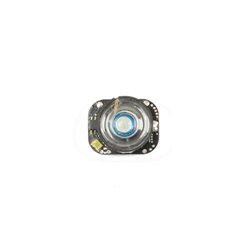
SFX+ Sound Capsule Diesel Multiple Unit
Price: £ 50.00DMU sound capsule WARNING! No battery included when shipped outside UK
Related posts
-
 What scale is Hornby?Hornby model railways are OO Scale or 1/76th that is 4 millimetres to the foot (12 inches). It runs on a track with...
 - How to weight my model so it does not tip?For wargaming figures, a small coin or washer glued to the under side of the base will usually to do the job. This...
- Is Bachmann compatible with Hornby?Yes, any OO scale loco, wagon or coach will work on any OO scale track, regardless of brand. Couplings are also...
- What are the model railway eras?According to Bachmann, as it states in their catalogue there are 9 eras. As they say in their catalogue this is not...
- Can a "DCC ready" train be used on analogue?Yes, you can use a DCC ready train on your analogue layout. DCC ready just means that the train has been factory...