Curved track measurements are sometimes a little hard to get your head around, some are advertised using a radius...

Cart 0 Product Products (empty)
No products
Free shipping! Shipping
£ 0.00 Total
Product successfully added to your shopping cart
Quantity
Total
There are 0 items in your cart. There is 1 item in your cart.
Total products (tax incl.)
Total shipping (tax excl.) Free shipping!
Total (tax incl.)
Search Tips
Tips categories
Latest Tips
-
 How can I tell how much space a curved track section will take up?Read more
 -
 What is the LMS Coronation Class?Read more
The LMS Coronation Class, also known as the "Duchess" class, was a series of express passenger steam locomotives...
-
 What is the difference between plastic cement and plastic glue?Read more
The difference between plastic cement and plastic glue lies primarily in how they work and the type of bond they...
-
 What is DAS?Read more
DAS is an air-drying clay. When dry it can be sanded and painted. It is ideal for many model making applications...
-
 How do I choose a scale for my model railway?Read more
Starting a model railway layout is an exciting endeavour, but one of the first decisions you'll need to make is which...

What is the best glue for installing glazing?
Many model kits, whether they be of buildings, coaches, aeroplanes or any other type of vehicle, will likely have glazing to attach at some point during the build. Your choice of glue when installing the glazing is an important one because many types of glue can cause plastic glazing to go opaque or misty after time.
This is caused by the fumes that many types of glue emit, especially cyanoacrylate adhesive (Super Glue). One possible solution to the problem is to use an odourless glue such as Deluxe Materials's Cyano Odourless or their Glue 'N' Glaze.
Both of these glues have the bonding power of a traditional cyanoacrylate adhesive, but without the potential to cloud glazing or annoy our delicate noses. So it really is a win-win.
Click here to receive the tips weekly in your mailbox. You can unsubscribe at any time.
Related products
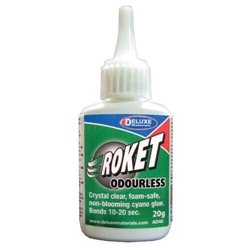
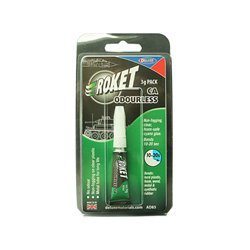
DISC**Roket Odourless (3g) (super glue)
Price: £ 3.75Roket Odourless (3g) Clear Cyanoacrylate adhesive (super glue) specially...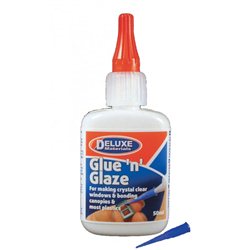
Glue 'N' Glaze
Price: £ 8.95Glue 'N' Glaze - 100ml For making crystal clear windows, bonding canopies and...
Related posts
-
 Do I need to wash my plastic kit?I personally wash all my plastic kits, I use warm soapy water (Washing up liquid) and a light rub over with a nail...
 - What is Milliput?Milliput is a two-part epoxy putty. There are two different colour rolls in a box when these are mixed together it...
- What modelling tools do I need to get started?Most modellers have an extensive tool kit, a tool for every eventuality. But when first starting a scalpel or a...
- How do I remove parts from the sprue?The short answer is carefully. The best way is with a sprue and plastic cutter but always be mindful of exactly...
- Do I need a cutting mat?It is not essential to have a cutting mat, but it is a good idea. It saves getting in trouble with your significant...