G & R Wrenn Limited was established in 1950 by brothers George and Richard Wrenn, with their third brother Cedric...

Cart 0 Product Products (empty)
No products
Free shipping! Shipping
£ 0.00 Total
Product successfully added to your shopping cart
Quantity
Total
There are 0 items in your cart. There is 1 item in your cart.
Total products (tax incl.)
Total shipping (tax excl.) Free shipping!
Total (tax incl.)
Search Tips
Tips categories
Latest Tips
-
 What was Wrenn?Read more
 -
 What is a Commonwealth bogie?Read more
Bogies are a chassis (or framework) that carry a wheelset on a railway locomotive or rollingstock. The Commonwealth...
-
 Can you use OO gauge outdoors?Read more
In theory, OO gauge can be used outdoors, modern nickel silver track, although will require a lot of cleaning, will...
-
 Is an exhibition layout different from a home layout?Read more
If you are accustomed to the world of model railways, then you'll already know what an exhibition layout is, but for...
-
 Is there a smaller model railway gauge than N?Read more
There are a couple of gauges smaller than N gauge, the most recognised being Z and T gauges.To give you an idea...

What is the "hard shell" method for constructing model hills?
There are several ways to construct hills on your layout. The 'hard shell' method consists of making a hard, hollow, hill-shaped shell that can be decorated with grass scatter, trees and bushes. The resulting model will be both lightweight and removable if required, making it ideal if your layout is not going to be a permanent structure.
To build a hard shell model, create the hill's rough shape using whatever materials you have readily available, this could be scrunched newspaper, a selection of small boxes, a temporary structure fashioned from a stiff card or a mixture of all three, virtually anything will do to create the rough shape. Next, cover your profile with a hard-setting material, again it's up to you what to use for this, from a homemade papier-mache concoction to more rigid shop-bought plaster clothes.
How hard, supporting and durable your shell ends up being, will depend on how much time you spend creating its layers. A shell that has been built up with numerous layers will be less prone to cracks and holes and will be a more stable structure to support your top layer of scenery so you would be well advised to take your time and use plenty of layers.
In addition to a hard shell model's weight and mobile advantages, they are easier to work on too because they can be constructed away from the layout allowing better access and less mess. This makes the hard shell method an interesting option for modellers who have restricted access to their layouts and is well worth considering.
Click here to receive the tips weekly in your mailbox. You can unsubscribe at any time.
Related products
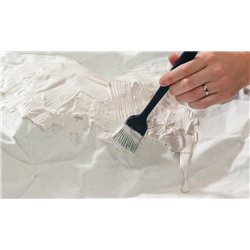
Shaper Sheet Plaster 3.5 Gal
Price: £ 16.50Shaper Sheet Plaster offers an extended working time and bonds with Shaper...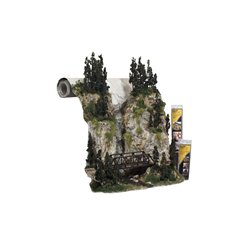
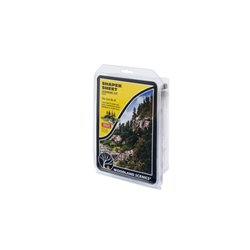
Shaper Sheet Learning Kit
Price: £ 24.95Shaper Sheet Learning Kit The Shaper Sheet Kit Learning Kit includes...
Related posts
-
 Is static grass better than scatter?I use both, separately and together. Static grass comes in various sizes from 0.5mm to 12mm while scatter is...
 - How do I apply static grass?Static grass is best applied using a static grass applicator. There are several on the market and they can apply...
- What colour are tree trunks?Tree trunks are actually grey in colour and not brown as you would think. The next time you are out and about just...
- How to make hills?You can make hills in a variety of ways. The tried and tested way is with chicken wire and papier mache. This is a...
- How do I glue scatter?Select the area where you want the scatter, then apply a layer of PVA glue, sprinkle your grass covering the glue....