Bogie Sulphate Wagons were, at the time, famed for being the largest open wagons of their type, but their demise was...

Cart 0 Product Products (empty)
No products
Free shipping! Shipping
£ 0.00 Total
Product successfully added to your shopping cart
Quantity
Total
There are 0 items in your cart. There is 1 item in your cart.
Total products (tax incl.)
Total shipping (tax excl.) Free shipping!
Total (tax incl.)
Search Tips
Tips categories
Latest Tips
-
 What is a bogie sulphate wagon?Read more
 -
 What is the best way to glue a cardboard building kit?Read more
The best way to glue a cardboard kit like Metcalfe or Superquick is to read and follow the instructions that are...
-
 How do I get started with weathering a plane?Read more
Weathering a plane is a fantastic way to add realism and character to your aircraft. It involves replicating the...
-
 What is the HOm scale?Read more
The HOm scale is a popular narrow-gauge modelling scale used by enthusiasts to represent railways that are smaller...
-
 What kind of solder should I use on white metal kits?Read more
If you are soldering a white-metal kit together, you will need to use a lower temperature setting on your soldering...

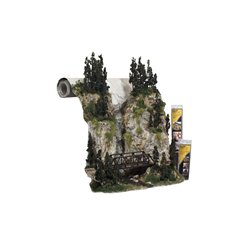
How to make hills?
You can make hills in a variety of ways.
The tried and tested way is with chicken wire and papier mache. This is a good method as there is very little weight to the finished hill.
If you just want a hill in the middle of your layout, I would suggest using some off cuts of polystyrene under the chicken wire to give it support, shape your chicken wire to give it the contours that you would like.
Then apply your strips of diluted PVA soaked newspaper over the chicken wire in an irregular manner I.e. some strips length ways and some side ways this will give the hill more strength when dry. Five or six layers of paper strips should do the job.
Once the paper is dry you can then paint and add scatter or flock.
This method can also be used for creating tunnels.
Click here to receive the tips weekly in your mailbox. You can unsubscribe at any time.
Related products
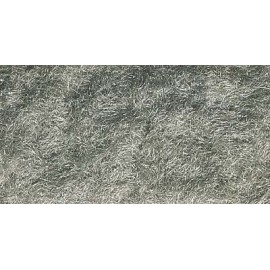
Light Green Flock
Price: £ 17.25Light Green FlockUse it to create dormant or dying grasses or weeds.57.7 in³...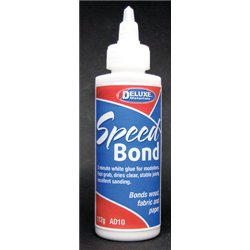
Related posts
-
 Do I need to paint my base boards?I would recommend painting your base board for two reasons: The first being it will seal the base board and prevent...
 - Is static grass better than scatter?I use both, separately and together. Static grass comes in various sizes from 0.5mm to 12mm while scatter is...
- How do I apply static grass?Static grass is best applied using a static grass applicator. There are several on the market and they can apply...
- What is a Diorama?A diorama is three-dimensional scene creating a moment in time, this could be a historical event or a fictional one,...
- What is the best wood for baseboards?The most common wood for baseboards is probably chipboard as this is relatively inexpensive. Plywood is another...