When it comes to model railways, the choice of point motors can greatly impact the performance and realism of a...

Cart 0 Product Products (empty)
No products
Free shipping! Shipping
£ 0.00 Total
Product successfully added to your shopping cart
Quantity
Total
There are 0 items in your cart. There is 1 item in your cart.
Total products (tax incl.)
Total shipping (tax excl.) Free shipping!
Total (tax incl.)
Search Tips
Tips categories
Latest Tips
-
 What advantages would a slower-acting point motor offer to my layout ?Read more
 -
 What is a snap together model kit?Read more
A snap together model kit is a type of model assembly kit where the pieces simply snap together without the need for...
-
 What is the difference between a Flow Improver and a Flow Retarder and when would I typically use them?Read more
Flow improver and flow retarder are both additives that can be added to acrylic paint when airbrushing to help...
-
 Are model railway layouts dangerous because of the use of electricity?Read more
Model railway layouts can be dangerous if they are not properly designed, constructed and maintained. Electrical...
-
 Is airbrushing better than hand painting?Read more
Both methods have their pros and cons. It takes a little practice to get proficient in using an airbrush but once...

How to create your own model mud ?
For many modellers creating scene elements is a significant part of adding extra realism and impact to a layout. Accumulated dirt and mud are a way of life for many outdoor activities, whether it be vehicles, trains or even buildings. Adding similar effects to a layout, diorama or model can add significant visual impact. One of the easiest accumulations to model is mud, which can be created very easily and cheaply and configured to the subject's needs.
Take a small amount of Plaster of Paris and place this in a small cup or similar device where it can easily be mixed. Next use an appropriately coloured pastel stick that can easily be sourced from an art supply or hobby shop. Scrape the pastel stick with a hobby knife into the Plaster of Paris, this will give colour to the mix. Stir the mixture thoroughly to integrate the pastel and plaster. When the appropriate colour has been achieved add a small amount of water to the mix. This will allow the mixture to run. The consistency of the mix can either be thinned or thickened by adding either more water or plaster as required.
When the required consistency has been achieved add a small amount of watered-down PVA glue, this allows the mixture to bond sufficiently to allow the modeller to apply it to the model or layout in clumps if necessary. Varying the amount of PVA applied will allow for different consistency so it's always good to experiment on scrap material to achieve the desired consistency.
This process is extremely versatile as it can be used to mimic other substances. By altering the pastel colour base used and consistency it may be possible to create other substances such as snow or sand. Why not try it out on your next project?
Posted in: Scenery
Click here to receive the tips weekly in your mailbox. You can unsubscribe at any time.
Related product
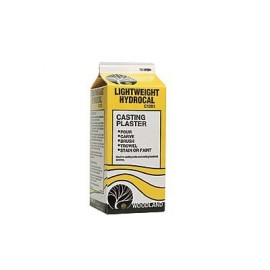
Lightweight Hydrocal Casting Plaster (900g)
Price: £ 16.50Create your own castings or use it to cast rocks or create your own...
Related posts
-
 Is static grass better than scatter?I use both, separately and together. Static grass comes in various sizes from 0.5mm to 12mm while scatter is...
 - How do I apply static grass?Static grass is best applied using a static grass applicator. There are several on the market and they can apply...
- What colour are tree trunks?Tree trunks are actually grey in colour and not brown as you would think. The next time you are out and about just...
- How to make hills?You can make hills in a variety of ways. The tried and tested way is with chicken wire and papier mache. This is a...
- How do I glue scatter?Select the area where you want the scatter, then apply a layer of PVA glue, sprinkle your grass covering the glue....