Station halts were not exclusively used on minor branch lines. While it is true that station halts were commonly...

Cart 0 Product Products (empty)
No products
Free shipping! Shipping
£ 0.00 Total
Product successfully added to your shopping cart
Quantity
Total
There are 0 items in your cart. There is 1 item in your cart.
Total products (tax incl.)
Total shipping (tax excl.) Free shipping!
Total (tax incl.)
Search Tips
Tips categories
Latest Tips
-
 Were station halts only used on minor branch lines?Read more
 -
 What is a blanking plate?Read more
A blanking plate is a little circuit board that can be plugged into a DCC model railway locomotive. Its function is...
-
 What is a pin vice?Read more
A pin vice is a small hand held twist drill with a number of uses. Mainly used for drilling small holes, it can hold...
-
 How do you drill holes to fit bearings in a bogie?Read more
Most modellers will be aware that the performance of a rough-running wagon or coach can be improved with the fitting...
-
 What is the difference between a train set and a layout?Read more
The knowledge that we acquire when building our model railway layouts leaves us with no doubt about the difference...

What are greeblies?
In the world of scale modelling, greeblies (or "greebles") refer to small, intricate details you add to your models to make them look more complex, realistic or futuristic. These can include tiny bits of plastic, wires or random odds and ends that you attach to a surface to suggest mechanical or technological detail.
If you're working on something like a spaceship or a sci-fi vehicle, greeblies are an excellent way to create that "lived-in" look you might recognise from films like Star Wars. For instance, parts from old kits—like leftover gears, vents or tiny panels—can be repurposed as greeblies. They don't necessarily need to serve any real-world function; their purpose is purely aesthetic, adding depth and a sense of realism to your model.
It's a creative process, so don’t be afraid to raid your spares box or even use household items like bits of old electronics or packaging. Greeblies are a brilliant way to take your model from basic to visually striking.
Posted in: Kit building
Click here to receive the tips weekly in your mailbox. You can unsubscribe at any time.
Related products
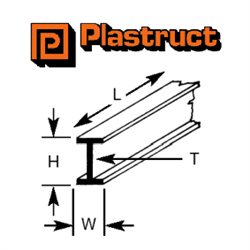
5/8″ Styrene I Beam (15.9 x 7.9 x 375mm)
Price: £ 3.255/8″ Styrene I Beam (15.9 x 7.9 x 375mm)Use for horizontal or diagonal...
Related posts
-
 Do I need to wash my plastic kit?I personally wash all my plastic kits, I use warm soapy water (Washing up liquid) and a light rub over with a nail...
 - What is Milliput?Milliput is a two-part epoxy putty. There are two different colour rolls in a box when these are mixed together it...
- What modelling tools do I need to get started?Most modellers have an extensive tool kit, a tool for every eventuality. But when first starting a scalpel or a...
- How do I remove parts from the sprue?The short answer is carefully. The best way is with a sprue and plastic cutter but always be mindful of exactly...
- Do I need a cutting mat?It is not essential to have a cutting mat, but it is a good idea. It saves getting in trouble with your significant...