Deciding which wire to use when wiring a model railway can sometimes be a little overwhelming, there are so many...

Cart 0 Product Products (empty)
No products
Free shipping! Shipping
£ 0.00 Total
Product successfully added to your shopping cart
Quantity
Total
There are 0 items in your cart. There is 1 item in your cart.
Total products (tax incl.)
Total shipping (tax excl.) Free shipping!
Total (tax incl.)
Search Tips
Tips categories
Latest Tips
-
 Is stranded wire better than solid wire for modelling?Read more
 -
 What is flock as used for scale modelling?Read more
In scale modelling, "flock" refers to finely ground fibres or particles used to simulate textures such as grass,...
-
 What are solenoid point motors?Read more
Solenoid point motors are used for throwing the points on your layout. They can also be used for other animations...
-
 How powerful a soldering iron do I need?Read more
Soldering irons are a little bit like the children's story "Goldilocks and the three bears": some are too hot, some...
-
 What is the internal gluing technique?Read more
The internal gluing technique is a common practice employed by modellers to avoid glue being extruded from between...

What adhesives should I use to assemble a kit with white metal parts ?
When assembling a kit with white metal parts, it is important to choose the right adhesive to ensure a strong and durable bond. White metal is a type of alloy that contains a high percentage of lead, which can make it challenging to find adhesives that work effectively. However, there are a few practical options to consider:
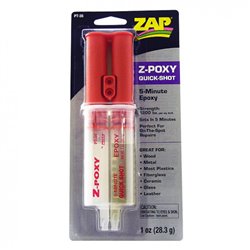
- Epoxy Resin : Epoxy resin is a popular choice for bonding white metal parts. It provides a strong bond and is resistant to heat and moisture. Make sure to select an epoxy resin that is suitable for metal bonding and follow the manufacturer's instructions for best results.
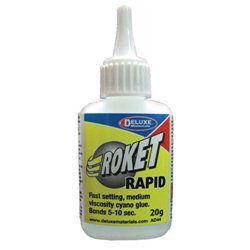
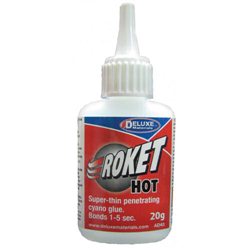
- Cyanoacrylate (super glue) : Cyanoacrylate, commonly known as CA glue or super glue, is another option for bonding white metal parts. It forms a quick and strong bond but it may not be as durable as epoxy resin. It is important to choose a super glue that is specifically designed for metal bonding.
- Two-Part Metal Adhesive : Two-part metal adhesives, such as those based on polyurethane or acrylic, can also be used for assembling white metal parts. These adhesives typically require mixing two components together before application. They provide a strong bond and are resistant to temperature and humidity changes.
Before applying any adhesive, it is important to clean the white metal parts thoroughly to remove any dirt, grease or oxidation. A dip and clean in warm water with mild detergent or metal cleaner is ideal for this purpose. Additionally, it is recommended to roughen the surfaces of the parts where any adhesive is to be applied. Sandpaper or a metal file can be used for this purpose and will help to improve the adhesive's grip.
Safety measures : When sanding, filing or cutting metal parts it is a good idea to wear eye protection. The tension within the white metal means that any parts cut can be propelled some distance and in random directions . Likewise, a simple filter mask is a good idea especially when filing or sanding to ensure harmful metal dust is not ingested.
Remember to always follow the instructions provided by the adhesive manufacturer and allow sufficient drying or curing time before handling the assembled parts.
Posted in: Assembling and gluing
Click here to receive the tips weekly in your mailbox. You can unsubscribe at any time.
Related products
Related posts
-
 Do I need to wash my plastic kit?I personally wash all my plastic kits, I use warm soapy water (Washing up liquid) and a light rub over with a nail...
 - What is Milliput?Milliput is a two-part epoxy putty. There are two different colour rolls in a box when these are mixed together it...
- What modelling tools do I need to get started?Most modellers have an extensive tool kit, a tool for every eventuality. But when first starting a scalpel or a...
- How do I remove parts from the sprue?The short answer is carefully. The best way is with a sprue and plastic cutter but always be mindful of exactly...
- Do I need a cutting mat?It is not essential to have a cutting mat, but it is a good idea. It saves getting in trouble with your significant...