In railway terms, a Mogul is a steam locomotive that has the wheel arrangement 2-6-0.This means that a Mogul will...

Cart 0 Product Products (empty)
No products
Free shipping! Shipping
£ 0.00 Total
Product successfully added to your shopping cart
Quantity
Total
There are 0 items in your cart. There is 1 item in your cart.
Total products (tax incl.)
Total shipping (tax excl.) Free shipping!
Total (tax incl.)
Search Tips
Tips categories
Latest Tips
-
 What is a Mogul locomotive?Read more
 -
 What is the purpose of the trailing truck on a steam locomotive ?Read more
The trailing truck on a steam locomotive serves several important purposes. It is located at the rear of the...
-
 What are the advantages of using Liquid Mask?Read more
As the name suggests, 'Liquid Mask' by Vallejo is a liquid-based masking agent, specially formulated for use by...
-
 What is the purpose of a flow retarder when airbrushing?Read more
The purpose of a flow retarder when airbrushing is to slow down the drying time of the paint in the airbrush,...
-
 What is P4 (Protofour)?Read more
P4 (also known as Protofour) is as true to the scale of 4mm to 1ft (1/76 scale) as you can get, giving a true...

How do I make a beach scene on my model railway layout?
Creating a beach scene on your model railway layout can add a lovely seaside vibe to your setup. Here are a few steps to get you started:
Base: Start by building up the terrain where your beach will sit. You can use foam board or plaster for this. Shape it to create gentle slopes down to the beach. If your beach scene includes water, plan the area where you'll pour resin for the sea.
Sand: For the beach itself, fine sand is ideal. You can buy model railway sand, but if you're after a more budget-friendly option, look for craft sand. Spread a thin layer of glue on the beach area and sprinkle the sand evenly. Gently press it down to secure it.
Water: If you want to include water, modelling resin or clear gloss varnish works well for the sea. You can tint it slightly blue or green for a realistic look. Pour it carefully to create a smooth surface, then use a toothpick or brush to shape waves or ripples. Let it dry thoroughly before continuing.
Details: Scatter small pebbles, shells or seaweed (which you can make from painted threads or foam) around the beach. Consider adding a few figures—children playing, sunbathers or even a dog. For that quintessential British seaside touch, add some deckchairs or beach huts. You can find ready-made ones or make your own with card and paint.
Promenade: If your scene includes a seaside town, a promenade with shops, cafes or an ice cream stand would add charm. You could create a small car park or even a section of pier if space allows.
Scenery: Background scenery like cliffs or rolling dunes can be made using foam and painted in natural shades. Adding grass tufts or small bushes around the edge of the beach gives a more finished look.
With these steps, your beach scene will come to life, creating a perfect holiday atmosphere on your layout.
Posted in: Scenery
Click here to receive the tips weekly in your mailbox. You can unsubscribe at any time.
Related products
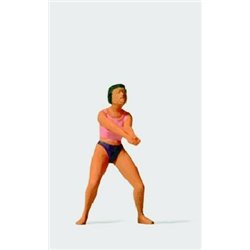
DISC**Beach Volleyball Figure
Price: £ 4.70OO Scale Beach Volleyball Figure By PreiserSet includes: One man One...
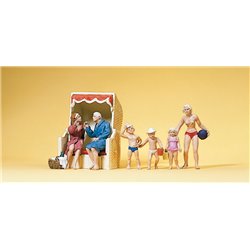
Couple in Beach Chair and Children (4)...
Price: £ 25.50Couple in Beach Chair and Children (4) Exclusive Figure SetDetailed plastic...
Related posts
-
 Is static grass better than scatter?I use both, separately and together. Static grass comes in various sizes from 0.5mm to 12mm while scatter is...
 - How do I apply static grass?Static grass is best applied using a static grass applicator. There are several on the market and they can apply...
- What colour are tree trunks?Tree trunks are actually grey in colour and not brown as you would think. The next time you are out and about just...
- How to make hills?You can make hills in a variety of ways. The tried and tested way is with chicken wire and papier mache. This is a...
- How do I glue scatter?Select the area where you want the scatter, then apply a layer of PVA glue, sprinkle your grass covering the glue....