Servo motors offer several advantages over solenoids when it comes to operating points and semaphore signals on a...

Cart 0 Product Products (empty)
No products
Free shipping! Shipping
£ 0.00 Total
Product successfully added to your shopping cart
Quantity
Total
There are 0 items in your cart. There is 1 item in your cart.
Total products (tax incl.)
Total shipping (tax excl.) Free shipping!
Total (tax incl.)
Search Tips
Tips categories
Latest Tips
-
 What advantages do servo motors have over solenoids for operating points and semaphore signals on a model railway layout?Read more
 -
 Do I need to varnish before applying a decal?Read more
It is a good idea to give your model a coat of gloss varnish before applying decals as this helps with the gluing...
-
 What is NMRA?Read more
NMRA stands for the National Model Railroad Association which is an organisation in North America that was set up to...
-
 What are different watt soldering irons for?Read more
If you've ever shopped for a soldering iron, you'll know that there's a wide range of soldering irons available from...
-
 Which turnouts are most realistic on a model railway layout?Read more
If you have ever been to a model railway show, you may well have been inspired and impressed by the realism of the...

How can I best clean my brushes after using enamel-based paints?
Cleaning brushes after using enamel-based paints can be a bit trickier than cleaning them after using water-based paints, as enamel paints are oil-based and take longer to dry. Here are some steps you can take to effectively clean your brushes after using enamel-based paints:
Use a brush cleaner or paint thinner: These solvents are specifically designed to dissolve and remove enamel paint from brushes. Dip the brush into the cleaner and work it through the bristles, then rinse the brush with clean solvent or water. It is important to note that prolonged exposure to strong solvents can also weaken the adhesive that attaches the bristles to the brush, so do not leave the brushes in solvents for long periods of time.
Use mineral spirits: These solvents can also be used to clean enamel paint from brushes, although they are generally considered less effective than brush cleaners or paint thinners.
Use soap and water: If the paint is still wet, you can use soap and water to clean the brush. Be sure to use a brush soap or dish soap, as regular hand soap may not be strong enough to remove the paint. Work the soap through the bristles and rinse the brush thoroughly with water.
Use a wire brush or a fine comb: To remove any dried accumulations of paint, use a wire brush or fine comb such as a nit comb to work through the bristles of the brush.
Dry the brush thoroughly: Once you have cleaned the brush, be sure to dry it thoroughly before storing it. Using enamel-based paints and their associated solvent cleaners will work any brush hard so it can also be useful to periodically use a brush conditioner such as Long Live the Brushes' by Mig Jimenez. This will help to protect and condition the bristles increasing brush longevity.
It's important to keep in mind that the longer the paint dries on the brush, the harder it will be to remove. So, it's best to clean the brush as soon as possible after use.
Posted in: Best practices
Click here to receive the tips weekly in your mailbox. You can unsubscribe at any time.
Related products
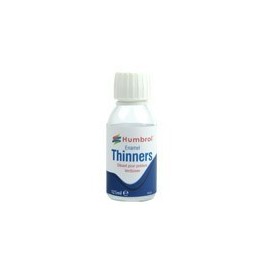
Enamel Thinners 125ml Tin (M8430A)
Price: £ 8.95Enamel Thinners 125ml Tin (M8430A) Thinning down of solvent-based enamel...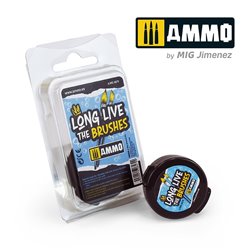
Long Live the Brushes
Price: £ 9.95Long Live the Brushes Soap specially formulated for the cleaning and care of...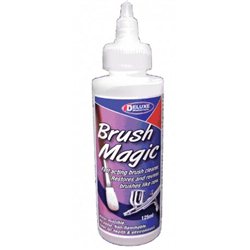
Brush Magic
Price: £ 12.75Brush Magic is a powerful, non flammable brush cleaner for the rapid cleaning...
Related posts
-
 Do I need a respirator?If you are using an aerosol spray paint you should always use one. Always read the manufacturer’s...
 - How to remove super glue (cyanoacrylate)?Cyanoacrylate is best known as super glue. The best way to remove it is with acetone or an acetone-based product...
- What is the best wood for baseboards?The most common wood for baseboards is probably chipboard as this is relatively inexpensive. Plywood is another...
- How do I stick parts together for a test fit?There are several trains of thought on the best way to secure parts together temporarily. Some suggest using a small...
- How to clean model railways track?There is of course the old tried and tested method, the track rubber which does the job, no railway modeller should...