Hand drills are used in modelling for intricate jobs where a power drill would not provide the delicacy, pace and...

Cart 0 Product Products (empty)
No products
Free shipping! Shipping
£ 0.00 Total
Product successfully added to your shopping cart
Quantity
Total
There are 0 items in your cart. There is 1 item in your cart.
Total products (tax incl.)
Total shipping (tax excl.) Free shipping!
Total (tax incl.)
Search Tips
Tips categories
Latest Tips
-
 What are the benefits of using a hand drill when modelling?Read more
 -
 How long does foam underlay last on average and is there any way to increase its longevity?Read more
The longevity of foam underlay can vary depending on a number of factors such as the quality of the foam, the...
-
 How can I add realistic tyre tracks to muddy terrain?Read more
Adding realistic tyre tracks to muddy terrain in your scale model can enhance the scene’s authenticity and tell a...
-
 In model railways, what is 2FS?Read more
In model railways, 2FS refers to 2mm Finescale or 2mm Scale Finescale. This is a specific modeling standard and scale...
-
 How do I attach figures to my layout?Read more
This depends on what type of figures you are using for your layout. If you are using white metal figures they often...

What is the difference between ready-to-run and kit-built model rolling stock?
When it comes to acquiring rolling stock for your model railway layout, you have two main options: ready-to-run models or kit-built models. Both have their own advantages and disadvantages, catering to different levels of experience and preferences amongst modellers.
Ready-to-Run Models
As the name suggests, ready-to-run (RTR) models come pre-assembled straight out of the box. These are ideal for those who want to get their layout up and running quickly without the hassle of construction. RTR rolling stock is manufactured by model railway companies like Bachmann, Hornby and Dapol, offering a wide range of locomotive, coach and wagon models across various scales and eras.
The main benefit of RTR models is their convenience - you simply take them out of the packaging and they are ready to run on your layout. The high standards of modern RTR models mean they often feature impressive levels of detail and decoration right out of the box. For those new to the hobby or with limited time, RTR is an easy way to build up a fleet.
However, RTR models do come at a higher cost compared to kits. You are paying for the labour involved in assembly and finishing. There is also less scope for customisation or super-detailing unless you are willing to modify the model yourself.
Kit-Built Models
In contrast, kit-built models require assembly from the individual components provided. This appeals to many modellers who enjoy the hands-on aspect of construction as part of the hobby. Model kit manufacturers like Parkside, Langley, Dundas and Cambrian offer a vast array of obscure prototypes often not available RTR.
Working on a kit allows you to develop skills like painting, lining, weathering, and detailing to create a truly unique model tailored to your own specifications. The pride and satisfaction that comes from building a model from scratch is a major draw for many enthusiasts.
That said, kit construction requires more time, tools, workspace and modelling skills. Kits can be quite fiddly, especially for the inexperienced, and the final result is only as good as your own ability. Purchasing multiple kits can also become costlier than RTR models over time once you factor in materials like paints, transfers and adhesives.
In essence, RTR models are the pragmatic choice for those wanting working models with minimal effort, whereas kits cater to hobbyists who prioritise the craft of model-making itself. The right option simply depends on your personal preferences, budget, time constraints and skill level. Many modellers opt for a combination of both on their layouts.
Posted in: Kit building
Click here to receive the tips weekly in your mailbox. You can unsubscribe at any time.
Related products
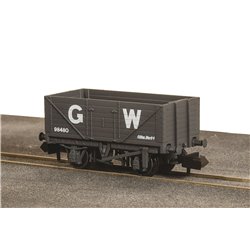
PECO N RTR 9ft 7 plank open wagon, GWR, grey
Price: £ 21.50PECO N RTR 9ft 7 plank open wagon, GWR, grey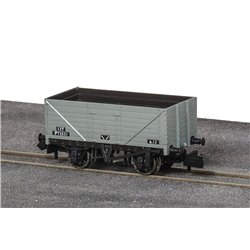
PECO N RTR 9ft 7 Plank Open Wagon, BR, Grey
Price: £ 21.50PECO N RTR 9ft 7 Plank Open Wagon, BR, Grey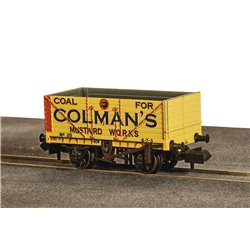
PECO N RTR 9ft 7 Plank Open Wagon, Colman's...
Price: £ 21.50PECO N RTR 9ft 7 Plank Open Wagon, Colman's Mustard
Related posts
-
 Do I need to wash my plastic kit?I personally wash all my plastic kits, I use warm soapy water (Washing up liquid) and a light rub over with a nail...
 - What is Milliput?Milliput is a two-part epoxy putty. There are two different colour rolls in a box when these are mixed together it...
- What modelling tools do I need to get started?Most modellers have an extensive tool kit, a tool for every eventuality. But when first starting a scalpel or a...
- How do I remove parts from the sprue?The short answer is carefully. The best way is with a sprue and plastic cutter but always be mindful of exactly...
- Do I need a cutting mat?It is not essential to have a cutting mat, but it is a good idea. It saves getting in trouble with your significant...