Throughout aviation history, many aircraft have been built and operated in an unpainted natural metal finish. During...

Cart 0 Product Products (empty)
No products
Free shipping! Shipping
£ 0.00 Total
Product successfully added to your shopping cart
Quantity
Total
There are 0 items in your cart. There is 1 item in your cart.
Total products (tax incl.)
Total shipping (tax excl.) Free shipping!
Total (tax incl.)
Search Tips
Tips categories
Latest Tips
-
 How do you achieve a natural metal finish on a plastic model aircraft?Read more
 -
 What is the difference between Peak Classes 44, 45 and 46 locomotives?Read more
British locomotive classes 44, 45 and 46 were an early design of diesel-electric locomotive intended for mainline...
-
 What is a superglue activator?Read more
A superglue activator, also known as a cyanoacrylate (CA) accelerator, is a chemical agent designed to speed up the...
-
 Were steam or diesel locomotives routinely used to push as opposed to pulling their loads?Read more
Both steam and diesel locomotives were occasionally used to push their loads instead of pulling them but this...
-
 What type of locomotive is a 'Jinty' and what were they used for ?Read more
The term 'Jinty' refers to a specific type of steam locomotive that was commonly used in the United Kingdom....

What is the best type of paint to use on white metal figures?
White metal figures are typically painted using oil-based or enamel paints. These types of paints have a higher viscosity and are slower-drying than other types of paint, which allows for more time to work on the details of the figure and achieve a smoother finish. They also adhere well to the metal surface and have good durability.
One popular method to paint white metal figures is to use a primer before painting, this allows the paint to better adhere to the model and prevents any rust or corrosion on the metal surface. Enamel or oil-based primers are suitable for white metal figures, they dry to a hard finish and provide a good base for subsequent paint layers.
Another alternative option is to use acrylic paints which are water-based and dry quickly, they are generally available in a wide range of colours and are easy to clean up. However, they will require a primer coat as they don't adhere well to metal surfaces and they dry to a softer finish.
Regardless of the type of paint you choose, it's important to use thin layers and build up the colour gradually, allowing each layer to dry completely before applying the next. It's also important to use paint specifically designed for metal figures and to follow the manufacturer's instructions for best results.
It is worth noting that some white metal figures may have a coating of a release agent on them to prevent them from sticking to the mould during casting. This release agent may need to be removed by cleaning the figure before painting. This is generally best done with warm water and a mild detergent such as washing-up liquid. This combination is particularly effective at breaking down and removing any lingering chemical residues that are left on metal parts. Once complete ensure that the parts are completely dry before painting commences.
Posted in: Painting
Click here to receive the tips weekly in your mailbox. You can unsubscribe at any time.
Related products
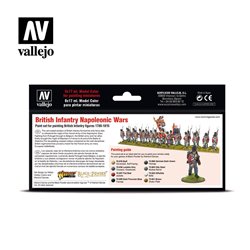
AV Vallejo Model Color Set - British Infantry...
Price: £ 23.99AV Vallejo Model Color Set - British Infantry Napoleonic Wars (8) The red...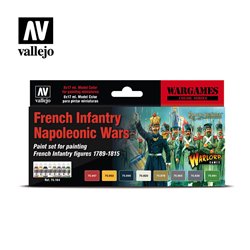
Vallejo Model Color Acrylic Paint Set - French...
Price: £ 23.99Vallejo Model Color Set - French Infantry Napoleonic Wars (x8) The French...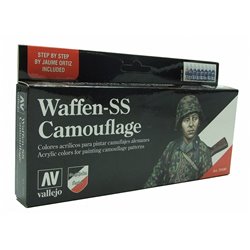
Model Color Set - Waffen SS Camouflage Paint...
Price: £ 23.99Model Color Set - Waffen SS Camouflage Paint Set x8
Related posts
-
 Do I need to use a primer?For best results it is advisable to use a primer as this will stick to the plastic and give a uniform coat of paint...
 - What is weathering?Weathering is a painting technique used by modellers to create the appearance of dirt and grime and even damage to...
- How do I clean brushes used with enamel paint?Enamel paint is solvent based, so trying to wash in water will not work, you need to use white spirit. It is...
- How do I fill holes in a model?There are many products on the market for filling holes: There are plastic putties straight out of the tube, there...
- What is the best size paintbrush?This would depend on what you are painting as paint brushes come in various shapes and sizes. I would say for...