Point rodding is a system of rods and bars that physically joins the lever of a signal box or ground frame with a set...

Cart 0 Product Products (empty)
No products
Free shipping! Shipping
£ 0.00 Total
Product successfully added to your shopping cart
Quantity
Total
There are 0 items in your cart. There is 1 item in your cart.
Total products (tax incl.)
Total shipping (tax excl.) Free shipping!
Total (tax incl.)
Search Tips
Tips categories
Latest Tips
-
 What is point rodding in model railways?Read more
 -
 Should I run in a brand new model railway locomotive?Read more
Yes, it is recommended to run in a brand-new model railway locomotive before regular use. Running in helps to ensure...
-
 When did semaphore signals stop being used in the UK?Read more
Semaphore signals, those distinctive mechanical arms that once graced railway lines across the UK, were largely...
-
 What is HOf?Read more
H0f (or H0f Feldbahn) is a specific scale within model railways, representing a blend of two key characteristics: the...
-
 Where would I use a retaining wall on a layout?Read more
Retaining walls are used to stop the soil from a slope falling under gravity where they could block railway tracks,...

What is the best size paintbrush?
This would depend on what you are painting as paint brushes come in various shapes and sizes.
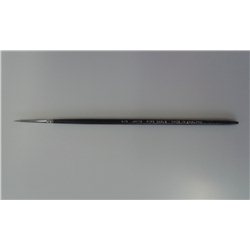
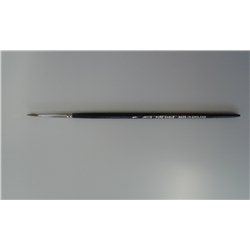
I would say for detailing you should a small brush, the exact size will depend on what you are painting. If for example you are painting a face, I would be inclined to use a 0 or a 00 brush which are the larger of the small brushes and if painting eyes a 00000 brush would be preferable as this is the smallest.
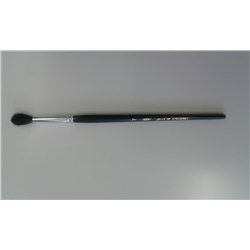
For larger areas requiring paint, I would suggest finding a size that you are comfortable with, starting with a number 2 or 3. A lot of model making is trial and error and there is no right or wrong. Find what works for you.
Always wash out paint brushes after use and repoint, especially the smaller brushes.
Posted in: Painting
Click here to receive the tips weekly in your mailbox. You can unsubscribe at any time.
Related products
Related posts
-
 Do I need to use a primer?For best results it is advisable to use a primer as this will stick to the plastic and give a uniform coat of paint...
 - What is weathering?Weathering is a painting technique used by modellers to create the appearance of dirt and grime and even damage to...
- How do I clean brushes used with enamel paint?Enamel paint is solvent based, so trying to wash in water will not work, you need to use white spirit. It is...
- How do I fill holes in a model?There are many products on the market for filling holes: There are plastic putties straight out of the tube, there...
- How long do I shake my paint for?Paint comes in many types of pots, cans and eye dropper bottles. You should shake paint for at least two minutes but...