Enamel was the original paint for modellers, acrylic being quite modern by comparison. Essentially the two paints...

Cart 0 Product Products (empty)
No products
Free shipping! Shipping
£ 0.00 Total
Product successfully added to your shopping cart
Quantity
Total
There are 0 items in your cart. There is 1 item in your cart.
Total products (tax incl.)
Total shipping (tax excl.) Free shipping!
Total (tax incl.)
Search Tips
Tips categories
Latest Tips
-
 What is the difference between enamel and acrylic paint?Read more
 -
 What is a Post Office sorting van?Read more
A Post Office sorting van refers to a type of specialised railway vehicle or wagon that was used by the British Post...
-
 What size wire should I use for wiring my model railway layout?Read more
The size of wire you should use for wiring your model railway layout depends on several factors, including the scale...
-
 How do I build a model railway in limited space?Read more
In the realm of model railways, enthusiasm often outstrips available space. But fear not! With careful planning and...
-
 What is a sable brush?Read more
A sable brush is a very high-quality brush often used in modelling for detail work thanks to its ability to be finely...

How many types of glue do I need to do modelling?
The types of glue you'll need for modelling depends on the materials you plan to work with. Here are 5 common options:
- PVA glue: This is a basic adhesive suitable for porous materials like paper, cardboard, and some porous plastics. You may know it as wood glue or Stickit.
- Super glue: These are quick-setting cyanoacrylate glues ideal for bonding non-porous materials like plastics, rubbers, metals, and some hardwoods.
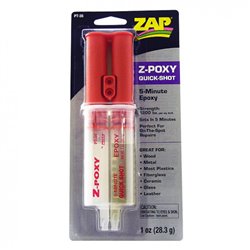
- Epoxy resin: Two-part epoxy adhesives provide an extremely strong, waterproof bond suitable for metals, plastics, ceramics, wood and more. Great for structural modelling applications.
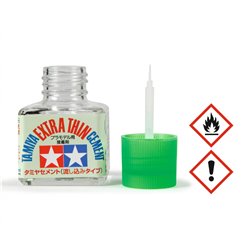
- Plastic cement: Specially formulated to chemically weld together plastic model kit parts. Essential for scale modelling with polystyrene plastic.
- Wood adhesive: For bonding wooden components. Look for aliphatic resin or polyurethane based wood glues.
For most general modelling, having a bottle of PVA glue and some super glue on hand will cover many basic needs. More specialised projects may require epoxy resin, plastic cement or other adhesives matched to the materials being used.
Posted in: Assembling and gluing
Click here to receive the tips weekly in your mailbox. You can unsubscribe at any time.
Related products
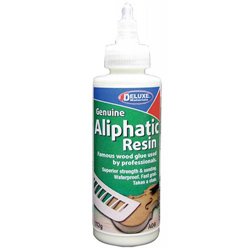
Aliphatic Resin 112g
Price: £ 8.25Genuine Aliphatic Resin - 112g bottle Wood glue used in aeromodelling and...
Related posts
-
 Do I need to wash my plastic kit?I personally wash all my plastic kits, I use warm soapy water (Washing up liquid) and a light rub over with a nail...
 - What is Milliput?Milliput is a two-part epoxy putty. There are two different colour rolls in a box when these are mixed together it...
- What modelling tools do I need to get started?Most modellers have an extensive tool kit, a tool for every eventuality. But when first starting a scalpel or a...
- How do I remove parts from the sprue?The short answer is carefully. The best way is with a sprue and plastic cutter but always be mindful of exactly...
- Do I need a cutting mat?It is not essential to have a cutting mat, but it is a good idea. It saves getting in trouble with your significant...