Pannier tank engines were small steam locomotives characterized by a water tank mounted on either side of the boiler,...

Cart 0 Product Products (empty)
No products
Free shipping! Shipping
£ 0.00 Total
Product successfully added to your shopping cart
Quantity
Total
There are 0 items in your cart. There is 1 item in your cart.
Total products (tax incl.)
Total shipping (tax excl.) Free shipping!
Total (tax incl.)
Search Tips
Tips categories
Latest Tips
-
 What were Pannier Tank Locomotives used for?Read more
 -
 Should I add weight to my empty rolling stock to help them run smoother and avoid derailing?Read more
Adding weight to empty rolling stock can help to improve their running smoothness and reduce the risk of derailing on...
-
 How do I remove plastic parts from sprues?Read more
When building a plastic kit model it is normal for the parts to come out of the box arranged on a plastic frame. This...
-
 How do I attach figures to my layout?Read more
This depends on what type of figures you are using for your layout. If you are using white metal figures they often...
-
 What is a wash?Read more
Washes are highly diluted paints used to bring out the detail in your model and enhance the appearance of the base...

How can I protect my track from oxidisation ?
Oxidation, also known as rust, can be a common problem for model railway tracks, especially if they are exposed to moisture or not properly maintained. Oxidation can lead to poor electrical conductivity, causing issues with train operation.
Here are some helpful tips to help protect layout track from oxidisation:
- Clean the tracks regularly : regular cleaning is essential to prevent the build-up of dirt, dust and other contaminants that can accelerate oxidation. Use a track cleaning solution or isopropyl alcohol and a track cleaning tool to remove any debris from the tracks. Be sure to clean both the rails and the sleepers.
- Apply a protective coating : after cleaning the tracks, consider applying a protective coating to prevent oxidation. There are various products available, such as track cleaning fluids with anti-corrosion properties or track sealants that create a barrier against moisture. Follow the manufacturer's instructions for application and reapplication intervals.
- Store the track properly : when not in use, it is useful to store the layout in a clean and dry environment. Moisture and humidity can accelerate oxidation, so it's important to keep any track protected from these elements. Another option that might be useful is to cover the layout with a protective cover. This will not only protect the track from moisture but will also act as a protective dust sheet.
- Use conductive lubricants : applying a thin layer of conductive lubricants, such as graphite or conductive grease, to the rails can help improve electrical conductivity and reduce the risk of oxidation. These lubricants create a barrier against moisture and help maintain a smooth flow of electricity.
- Install a track cleaning system : for larger layouts or areas that are difficult to access, consider installing a track cleaning system. These systems can automatically clean the tracks while the trains are running, ensuring that oxidation is kept at bay. There are various types of track cleaning systems available, including abrasive pads or rotating brushes.
By following these tips, modellers can protect their layout tracks from oxidisation and ensure smooth and reliable operation of their trains. Remember to clean all tracks regularly, apply a protective coating, store or protect the track properly, use conductive lubricants and consider installing a track cleaning system if needed.
Posted in: Tracks
Click here to receive the tips weekly in your mailbox. You can unsubscribe at any time.
Related products
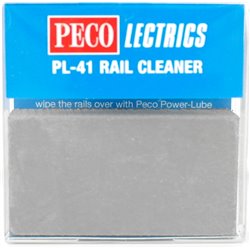
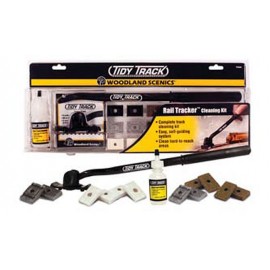
Rail Tracker Cleaning Kit (N & OO/HO Scale)
Price: £ 43.50The Rail Tracker cleaning tool actually follows the track and hugs the rail...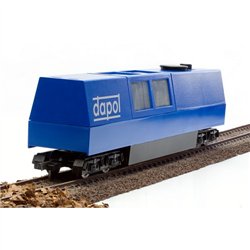
Motorised track cleaner
Price: £ 92.99Motorised track cleanerThis model needs to be hauled by a locomotive, as...
Related posts
-
 How to clean model railways track?There is of course the old tried and tested method, the track rubber which does the job, no railway modeller should...
 - Is Peco track and Hornby track compatible?Peco Setrack and Peco Streamline are compatible with Hornby track as they all share the same gauge width of 16.5mm....
- How often should I clean my track?This a hard question to answer. There are no hard and fast rules about how often you should clean the track. Bear in...
- How do I cut flexible track?Once upon a time I would have said a newly bladed junior hacksaw and some warding files, but these days I would have...
- How many pieces of curved track do I need to make a circle?As we all know it takes 360 degrees to create a circle, a standard curve is 22.5 degrees and a double curve is 45...