A composite coach is a railway carriage with accommodation for more than one class of passengers.In the early...

Cart 0 Product Products (empty)
No products
Free shipping! Shipping
£ 0.00 Total
Product successfully added to your shopping cart
Quantity
Total
There are 0 items in your cart. There is 1 item in your cart.
Total products (tax incl.)
Total shipping (tax excl.) Free shipping!
Total (tax incl.)
Search Tips
Tips categories
Latest Tips
-
 What is a composite coach?Read more
 -
 What is shaper sheet?Read more
Shaper sheets are a material used to create self-supporting hills or terrain on a model railway layout or other...
-
 What is the advantage of a fan fiddle yard in model railway?Read more
A fan fiddle-yard is a permanent fiddle yard where each track is accessed via a series of turnouts 'fanning' out from...
-
 How can I best achieve realistic looking blade sag on the rotor blades of my helicopter model ?Read more
Rotor-sag, sometimes also referred to as rotor droop produces a notable curve in the rotor blades of a parked...
-
 What type of equipment is used to recover a derailed train ?Read more
When a train derails, it can be a challenging and complex task to recover it and get it back on track. Specialized...

How often should I clean my track?
This a hard question to answer. There are no hard and fast rules about how often you should clean the track. Bear in mind the track carries the electricity to the engine, so if your track is not clean, your trains are not going to run correctly. Regardless of where you have your layout, it is going to be prone to dust and in need of a good dusting every time you use your layout.
Send your loco around the track, if its running like a three-legged hedgehog then I would suggest a clean. If the track feels lumpy as you navigate your way around the layout, go over the offending area with a track rubber.
If like me you like the easy life, then get yourself a motorised track cleaning wagon, send it round at the start of each session and you are good to go.
No leaves on the track here!
Click here to receive the tips weekly in your mailbox. You can unsubscribe at any time.
Related products
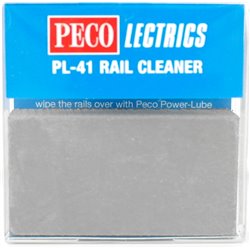
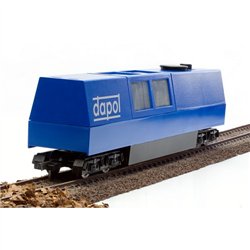
Motorised track cleaner
Price: £ 92.99Motorised track cleanerThis model needs to be hauled by a locomotive, as...
Related posts
-
 Do I need a respirator?If you are using an aerosol spray paint you should always use one. Always read the manufacturer’s...
 - How to remove super glue (cyanoacrylate)?Cyanoacrylate is best known as super glue. The best way to remove it is with acetone or an acetone-based product...
- What is the best wood for baseboards?The most common wood for baseboards is probably chipboard as this is relatively inexpensive. Plywood is another...
- How do I stick parts together for a test fit?There are several trains of thought on the best way to secure parts together temporarily. Some suggest using a small...
- How to clean model railways track?There is of course the old tried and tested method, the track rubber which does the job, no railway modeller should...