Flow improver and flow retarder are both additives that can be added to acrylic paint when airbrushing to help...

Cart 0 Product Products (empty)
No products
Free shipping! Shipping
£ 0.00 Total
Product successfully added to your shopping cart
Quantity
Total
There are 0 items in your cart. There is 1 item in your cart.
Total products (tax incl.)
Total shipping (tax excl.) Free shipping!
Total (tax incl.)
Search Tips
Tips categories
Latest Tips
-
 What is the difference between a Flow Improver and a Flow Retarder and when would I typically use them?Read more
 -
 What is a wash?Read more
Washes are highly diluted paints used to bring out the detail in your model and enhance the appearance of the base...
-
 Can you get figures for pre-grouping era 2 (1875-1922) layouts?Read more
There are lots of figures available concentrating on the 'Big Four' and early 'British Railways' eras, this often...
-
 What is a Eduard ProfiPACK kit?Read more
Understanding the names that manufacturers give specific collections within their range can be a little bewildering...
-
 How can I create undulating terrain and hills on my layout ?Read more
Creating undulating terrain and hills can add depth and realism to a layout. Here are a few methods that can be used...

Why are some passenger carriages configured as clerestory?
Clerestory carriages were a common style of passenger carriage in the late 19th and early 20th centuries, characterised by a raised roof section with windows along the sides. In the context of model railways, some passenger carriages are configured as clerestory carriages for historical accuracy and to add visual interest to layouts.
One reason that clerestory carriages were popular in the early days of railway travel was that they allowed for better ventilation and natural light. The raised roof section allowed for hot air to rise and escape, which helped to keep the carriage cooler and more comfortable for passengers. The windows along the sides also provided additional natural light, reducing the need for artificial lighting.
In terms of modelling, clerestory carriages can add an interesting historical element to a layout, particularly for those modelling the late 19th and early 20th centuries. Many model railway enthusiasts enjoy recreating the look and feel of the early days of railway travel, and clerestory carriages can be a great way to do this.
Additionally, some model railway enthusiasts simply appreciate the aesthetic appeal of clerestory carriages. The raised roof section and the rows of windows can add an interesting visual element to a layout and can make for an eye-catching addition to a collection of rolling stock.
Overall, while clerestory carriages are no longer in widespread use on modern railways, they remain a popular choice among model railway enthusiasts who appreciate their historical significance and visual appeal.
Posted in: Rolling stock
Click here to receive the tips weekly in your mailbox. You can unsubscribe at any time.
Related products
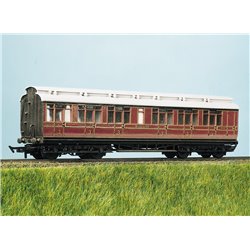
MR Express Clerestory, All 3rd & Luggage
Price: £ 27.50A plastic kit of a Midland Region Clerestory, all 3rd & luggage coach in...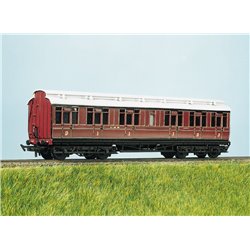
MR Express Clerestory, Composite Coach
Price: £ 27.50A plastic kit of a Midland Region express Clerestory composite coach....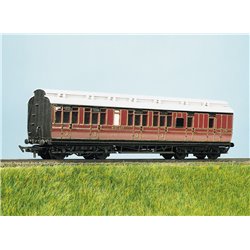
LMS (ex Midland Railway) Clerestory Coach Brake...
Price: £ 27.50A plastic kit requiring assembly and painting of an LMS (ex Midland Railway)...
Related posts
-
 How to weight my model so it does not tip?For wargaming figures, a small coin or washer glued to the under side of the base will usually to do the job. This...
 - Is Bachmann compatible with Hornby?Yes, any OO scale loco, wagon or coach will work on any OO scale track, regardless of brand. Couplings are also...
- What are tension lock couplings?Tension lock couplings are the standard couplings for model trains in the UK. These are the ones we all know from...
- How do I test the width between the wheels of my engines?The best way to check the wheels of your locomotives is to use a tool called a back to back gauge. They are...
- How do I clean the wheels of my engine?One easy way is to get yourself a Peco cleaning kit containing a wire brush, wheel scraper, foam cradle and oil. The...