Tracksetta is a term that refers to a tool used for the shaping of flexible track sections, it is sometimes also...

Cart 0 Product Products (empty)
No products
Free shipping! Shipping
£ 0.00 Total
Product successfully added to your shopping cart
Quantity
Total
There are 0 items in your cart. There is 1 item in your cart.
Total products (tax incl.)
Total shipping (tax excl.) Free shipping!
Total (tax incl.)
Search Tips
Tips categories
Latest Tips
-
 Is there a Tracksetta for N gauge?Read more
 -
 What is an automated shuttle system?Read more
An automated shuttle system is what you would use to make a model train go up and down a line without the need for...
-
 How can I transition between different track codes on my layout?Read more
When building a model railway layout, it is not uncommon to use different track codes for various reasons. This can...
-
 What are inspection pits and where would I install one on my layout?Read more
An inspection pit is a feature commonly found in model railway layouts that mimics real-life railway workshops. It is...
-
 What is a cyanoacrylate (super glue) accelerator?Read more
Superglue has strong bonding properties but still takes time to cure. Depending on the type of superglue you use, the...

Should I run in a brand new model railway locomotive?
Yes, it is recommended to run in a brand-new model railway locomotive before regular use. Running in helps to ensure that the moving parts are properly lubricated and that the motor has a chance to settle into its operating range. It's important to follow the manufacturer's instructions for running in, as different models may have different requirements. Additionally, it is recommended to take it slowly and make gradually increasing speed tests, this is to check the locomotive is functioning properly and to make any necessary adjustments before regular use.
Here are some steps to follow to run in a new model railway locomotive:
Start with a slow speed test: Begin by running the locomotive at a slow speed for a few minutes, then stop it and check for any unusual sounds or vibrations.
Gradually increase speed: Slowly increase the speed of the locomotive and keep an eye out for any issues. It is important to avoid putting too much strain on the motor and gears during the run-in period.
Check the direction of travel: Make sure the locomotive is running in the correct direction. Some models may have specific requirements for running in and may need to be run in a particular direction to prevent damage to the gears.
Pay attention to sounds and performance: Observe any unusual sounds or vibrations and be mindful of the locomotive's performance. If anything out of the ordinary is observed, then the locomotive should be stopped and investigated to identify the issue.
Repeat the process: Repeat the process of gradually increasing the speed until the recommended run-in period has been completed.
It is important to follow the manufacturer's instructions for running in a model railway locomotive, as different models may have different requirements. Additionally, it is a good idea to keep records of the running in process so that they can be referred to in the future.
Posted in: Rolling stock
Click here to receive the tips weekly in your mailbox. You can unsubscribe at any time.
Related products
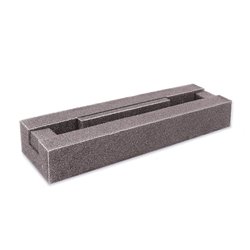
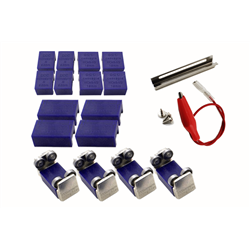
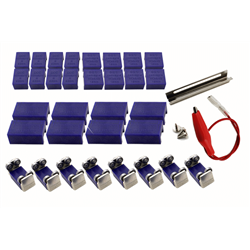
Multi Gauge 8 Axle Rolling Road
Price: £ 79.95Multi Gauge 8 Axle Rolling Road DCCconcepts Rolling Roads help with running...
Related posts
-
 How to weight my model so it does not tip?For wargaming figures, a small coin or washer glued to the under side of the base will usually to do the job. This...
 - Is Bachmann compatible with Hornby?Yes, any OO scale loco, wagon or coach will work on any OO scale track, regardless of brand. Couplings are also...
- What are tension lock couplings?Tension lock couplings are the standard couplings for model trains in the UK. These are the ones we all know from...
- How do I test the width between the wheels of my engines?The best way to check the wheels of your locomotives is to use a tool called a back to back gauge. They are...
- How do I clean the wheels of my engine?One easy way is to get yourself a Peco cleaning kit containing a wire brush, wheel scraper, foam cradle and oil. The...