When deciding what and how of much something to put on your model railway layout, we must insist that you adhere to...

Cart 0 Product Products (empty)
No products
Free shipping! Shipping
£ 0.00 Total
Product successfully added to your shopping cart
Quantity
Total
There are 0 items in your cart. There is 1 item in your cart.
Total products (tax incl.)
Total shipping (tax excl.) Free shipping!
Total (tax incl.)
Search Tips
Tips categories
Latest Tips
-
 How much track is too much track on a layout?Read more
 -
 Are different types of side cutters really necessary?Read more
There's nothing wrong with a basic toolbox for the occasional job, and that's what most of us have, so why are there...
-
 What is the best way to apply super glue (cyanoacrylate)?Read more
This really depends on what it is you plan to glue, most things can be glued straight from the bottle, but this will...
-
 How far apart should telegraph poles be on N and OO/HO gauge layouts?Read more
Telegraph poles are a common feature on model railway layouts, as they can add a touch of realism and authenticity to...
-
 How many crew did a steam locomotive generally carry?Read more
The number of crew members on a steam locomotive generally depended on the specific type and size of the locomotive,...

What is the best way to apply super glue (cyanoacrylate)?
This really depends on what it is you plan to glue, most things can be glued straight from the bottle, but this will give you quite a large bead of glue on application, which may be more than you need and cause an over spill on your model leaving an unsightly amount of glue on the seam.
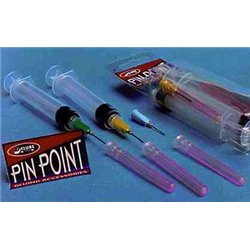
Some modellers will use a cocktail stick/toothpick to add a small amount of glue. There are glues that come with metal needle type applicators for precision work and there are also disposable plastic tips for certain brands of super glue such as Roket which allow for a precise delivery of glue.
You can also use syringes to deliver just the right amount in the right place.
There are also microbrushes which are equally as good.
I personally use all of the above to allow for every eventuality. It all comes down to "the right tool for the job".
Click here to receive the tips weekly in your mailbox. You can unsubscribe at any time.
Related products
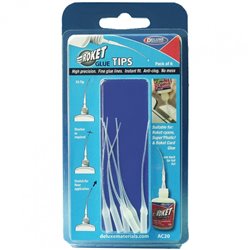
Roket Glue Tips (x6)
Price: £ 6.95Precision, Fine glue lines. Instant fit - Anti clog - No mess. One piece glue...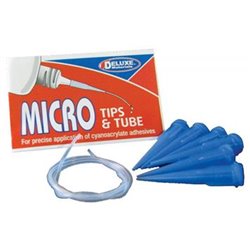
Related posts
-
 Do I need to wash my plastic kit?I personally wash all my plastic kits, I use warm soapy water (Washing up liquid) and a light rub over with a nail...
 - What is Milliput?Milliput is a two-part epoxy putty. There are two different colour rolls in a box when these are mixed together it...
- What modelling tools do I need to get started?Most modellers have an extensive tool kit, a tool for every eventuality. But when first starting a scalpel or a...
- How do I remove parts from the sprue?The short answer is carefully. The best way is with a sprue and plastic cutter but always be mindful of exactly...
- Do I need a cutting mat?It is not essential to have a cutting mat, but it is a good idea. It saves getting in trouble with your significant...