If you have ever opened up a traditional brushed DC motor (the motor on older model railway locomotives), you would...

Cart 0 Product Products (empty)
No products
Free shipping! Shipping
£ 0.00 Total
Product successfully added to your shopping cart
Quantity
Total
There are 0 items in your cart. There is 1 item in your cart.
Total products (tax incl.)
Total shipping (tax excl.) Free shipping!
Total (tax incl.)
Search Tips
Tips categories
Latest Tips
-
 What is the difference between a 3 pole and 5 pole motor?Read more
 -
 How do I glue plastic models to a diorama covered in scatter?Read more
Deciding which glue to use when attaching plastic models to a baseboard is tricky enough at the best of times, but...
-
 What is the difference between a single action and double action airbrush ?Read more
When it comes to airbrushing, there are two main types of airbrushes : single action and double action. These terms...
-
 Is it possible to use insulated fishplates to isolate a section of track?Read more
Yes, it is possible to use insulated fishplates to isolate a section of track. Insulated fishplates, also known as...
-
 What are my options for operating a funicluar railway on my layout ?Read more
A funicular railway, also known as an inclined plane or cliff railway, is a unique feature that can add a lot of...

How can I secure cardboard or plastic models to a layout baseboard?
There are several options for securing plastic or card model buildings to a baseboard:
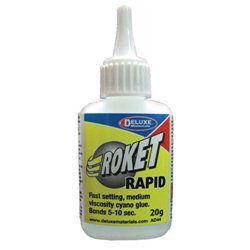
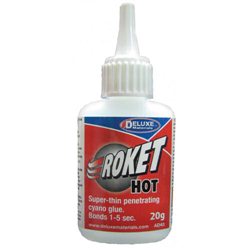
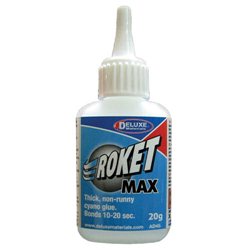
Using a strong adhesive such as a cyanoacrylate (CA) based modelling superglue or a plastic cement can be effective for securing plastic and cardboard models to a baseboard. Be sure to use the glue sparingly and only apply it to the points of contact between the model and the baseboard, as too much glue can cause the model to become unstable or deformed. Additionally, PVA or White glue can also be used, this has a longer cure time than CA-based glues and so will aid the modeller by giving them a greater window of time for precise positioning the item in question.
Double-sided tape can be used to secure models to a baseboard, especially if the model is relatively lightweight. Be sure to use a tape with a strong adhesive to ensure that the model stays in place.
If the model is particularly heavy or large, it may be necessary to use screws or nails to secure it to the baseboard. This can provide a more secure hold, but it may also cause damage to the model if not done carefully.
It's important to avoid using too much glue or adhesive, as this can cause the model to become unstable or cause it to deform over time. It's also important to be gentle when handling the model, as rough handling or applying too much force can cause it to become damaged.
Another factor to be considered is to ask does the item in question necessarily have to be permanently secured in place. Layouts can be notoriously prone to damage especially when they are being moved or being broken down for storage. When a layout is set up in a permanent location then it may make sense to secure all its associated buildings in place. Unfortunately, for many modellers, this may not always be the case as layouts compete for space and time with other household requirements. In this situation, it may make sense to have buildings that can easily be removed for separate storage to reduce the risk of collateral damage. Inevitably this is based on the modeller's subjective view and as such, there is no right or wrong answer.
Posted in: Assembling and gluing
Click here to receive the tips weekly in your mailbox. You can unsubscribe at any time.
Related products
Related posts
-
 Do I need to wash my plastic kit?I personally wash all my plastic kits, I use warm soapy water (Washing up liquid) and a light rub over with a nail...
 - What is Milliput?Milliput is a two-part epoxy putty. There are two different colour rolls in a box when these are mixed together it...
- What modelling tools do I need to get started?Most modellers have an extensive tool kit, a tool for every eventuality. But when first starting a scalpel or a...
- How do I remove parts from the sprue?The short answer is carefully. The best way is with a sprue and plastic cutter but always be mindful of exactly...
- Do I need a cutting mat?It is not essential to have a cutting mat, but it is a good idea. It saves getting in trouble with your significant...