Deciding which glue to use when attaching plastic models to a baseboard is tricky enough at the best of times, but...

Cart 0 Product Products (empty)
No products
Free shipping! Shipping
£ 0.00 Total
Product successfully added to your shopping cart
Quantity
Total
There are 0 items in your cart. There is 1 item in your cart.
Total products (tax incl.)
Total shipping (tax excl.) Free shipping!
Total (tax incl.)
Search Tips
Tips categories
Latest Tips
-
 How do I glue plastic models to a diorama covered in scatter?Read more
 -
 What are Tracksetta templates?Read more
Tracksetta templates are essential tools for ensuring that your model railway track is laid accurately and...
-
 What is a G clamp?Read more
A G clamp is traditionally used in wood working for holding pieces of wood in place whilst being glued etc and come...
-
 What is the difference between single and double slip points?Read more
A single slip point has one moveable rail that can direct a train onto one of two possible tracks. The single movable...
-
 Do cambers help model trains traverse a bend?Read more
In real life, railway tracks tilt slightly as they negotiate curves. The tilt is known by many names, including a...

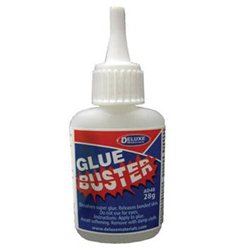
How easily can I remove adhesives or putties?
There are several types of glues that can be removed for repair purposes, including:
Solvent-based glues such as cyanoacrylate (CA) glue can be dissolved with a solvent such as acetone or naphtha. These solvents can be applied to the glue with a cotton swab or other applicator and will dissolve the glue and allow it to be easily removed.
Water-based glues such as white glue or PVA glue can be softened or dissolved with water. This makes them relatively easy to remove, although it may be necessary to use a scraper or other tool to carefully remove the softened glue.
There are also several types of putties that can be used for repairs and are relatively easy to remove. For example, "Green Stuff" is a two-part modelling putty that can be moulded and shaped as needed, and can be easily removed with water or a solvent such as acetone.
It's important to choose a glue or putty that is suitable for the materials you are working with, as some glues may damage or discolour certain materials. It's also important to follow the manufacturer's instructions for use and removal, as improper use or handling of these products can result in damage or injury.
Bear in mind that the removal of an adhesive is not always an easy process as in many cases it may be hidden by the parts in question, making it difficult to access. Another consideration is that many adhesives used to assemble plastic kits work by melting the surfaces in question to form a join. If done carefully this creates a seamless join that is aesthetically pleasing and not necessarily visible to the casual observer. Any chemicals used to undo this process, if not carefully used can end up causing unwanted damage to the parts to be removed. One important factor to consider is the amount of adhesive originally used to secure the parts in the first place. Where large amounts of adhesive have been used it may not be practical or possible to separate the parts without irreparable damage being inflicted on the subject item.
Posted in: Assembling and gluing
Click here to receive the tips weekly in your mailbox. You can unsubscribe at any time.
Related products
Related posts
-
 Do I need to wash my plastic kit?I personally wash all my plastic kits, I use warm soapy water (Washing up liquid) and a light rub over with a nail...
 - What is Milliput?Milliput is a two-part epoxy putty. There are two different colour rolls in a box when these are mixed together it...
- What modelling tools do I need to get started?Most modellers have an extensive tool kit, a tool for every eventuality. But when first starting a scalpel or a...
- How do I remove parts from the sprue?The short answer is carefully. The best way is with a sprue and plastic cutter but always be mindful of exactly...
- Do I need a cutting mat?It is not essential to have a cutting mat, but it is a good idea. It saves getting in trouble with your significant...