When it comes to assembling a kit with wooden parts, there are a few different adhesives that can be used depending...

Cart 0 Product Products (empty)
No products
Free shipping! Shipping
£ 0.00 Total
Product successfully added to your shopping cart
Quantity
Total
There are 0 items in your cart. There is 1 item in your cart.
Total products (tax incl.)
Total shipping (tax excl.) Free shipping!
Total (tax incl.)
Search Tips
Tips categories
Latest Tips
-
 What adhesives should I use to assemble a kit with wooden parts ?Read more
 -
 How can I add realistic tyre tracks to muddy terrain?Read more
Adding realistic tyre tracks to muddy terrain in your scale model can enhance the scene’s authenticity and tell a...
-
 What is the best way to store paint?Read more
Always store paint in a cool dry place, or room temperature, do not leave in direct sunlight especially aerosols....
-
 What is the recommended platform length for a model railway station ?Read more
When it comes to determining the platform length for a model railway station, there are a few factors to consider....
-
 What is the difference between Micro Set and Micro Sol?Read more
Micro Set and Micro Sol are two distinct but complementary decal setting solutions produced by Microscale Industries....

What is the best way to cut photo etch parts from a fret?
Photo Etch, or PE parts are metal parts that are generally made from brass. Many model kits are supplied with PE parts that are supplied on their own specific sprues, which are usually referred to as frets. The great advantage of PE parts is they are actually very strong and as such can be produced in much finer dimensions than the regular plastic ‘styrene’ parts that usually make up most model kits. Many manufacturers supply PE frets as they offer the opportunity for significant details improvements and scale realism for many models.
As with normal styrene components, PE parts will have to be cut from their frets before assembly. The best way to achieve this is either with a pair of snips or with a sharp hobby knife. A number of manufacturers have created snips that are specifically configured for working with PE parts and these can be a good investment for modellers who are regularly working with PE parts. PE frets tend to be very densely packed with components and as such it may not always be possible to use snips to remove a part. As a result, it is generally a good idea to have a sharp hobby knife as a backup with a good supply of replacement blades, as regular cutting of PE parts can quickly lead to a dull blade.
When using a hobby knife a flat solid surface is essential for safe removal of PE components. A self-healing mat can be useful for this task, although many modellers will prefer a more solid surface such as wood which is less likely to distort the part during cutting. When using a hobby knife, it is also a good idea to wear some form of eye protection. This is because PE parts are generally held on their frets with high tension and as such can catapult in random directions during the cutting process.
When successfully removed from their frets, PE parts may have unwanted burrs that will need to be removed prior to fitting on the model. This can be achieved either by careful use of a hobby knife or by a smooth grain sanding stick. Care should be taken during this process, as a part that is roughly handled can easily be bent or distorted.
Due to their small size, most PE parts will need to be held by tweezers when fitted to a model. However, some spring-loaded tweezers can have too much tension which can easily result in the part being catapulted in a random direction, often never to be found again! Gentle Grips are a good way to avoid this problem. They are tweezers that have rubber sheaths applied to their tips, ensuring that they gently hold the PE part without applying excess force that could end up in an involuntary catapulting action. The gentle pressure exerted ensures minimal distortion to the PE part in question.
Posted in: Assembling and gluing
Click here to receive the tips weekly in your mailbox. You can unsubscribe at any time.
Related products
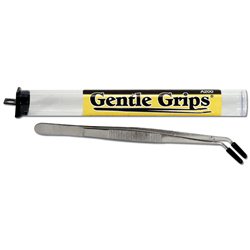
Scenic Accents Gentle Grips
Price: £ 11.50Scenic Accents Gentle GripsFinely hand-painted figures, ideal to bring life...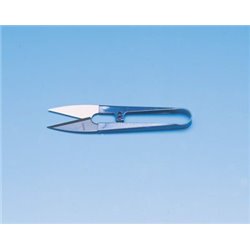
Microsnips for cutting thread
Price: £ 3.50A pair of microsnips specially designed for cutting thread.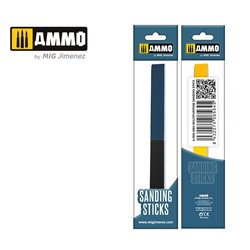
Related posts
-
 Do I need to wash my plastic kit?I personally wash all my plastic kits, I use warm soapy water (Washing up liquid) and a light rub over with a nail...
 - What is Milliput?Milliput is a two-part epoxy putty. There are two different colour rolls in a box when these are mixed together it...
- What modelling tools do I need to get started?Most modellers have an extensive tool kit, a tool for every eventuality. But when first starting a scalpel or a...
- How do I remove parts from the sprue?The short answer is carefully. The best way is with a sprue and plastic cutter but always be mindful of exactly...
- Do I need a cutting mat?It is not essential to have a cutting mat, but it is a good idea. It saves getting in trouble with your significant...