There is no single "perfect" size for a model railway layout as it depends on several factors such as the scale you...

Cart 0 Product Products (empty)
No products
Free shipping! Shipping
£ 0.00 Total
Product successfully added to your shopping cart
Quantity
Total
There are 0 items in your cart. There is 1 item in your cart.
Total products (tax incl.)
Total shipping (tax excl.) Free shipping!
Total (tax incl.)
Search Tips
Tips categories
Latest Tips
-
 What is the perfect size for a model railway layout?Read more
 -
 Is lighting for model buildings difficult to install?Read more
There are a couple of manufacturers of building lighting out there that claim their products are easy to install. But...
-
 Are there alternatives to using scatter when creating surface vegetation?Read more
One of the most satisfying ways to bring a layout or diorama to life is to blend it into some form of natural...
-
 How many cows should I have in a field?Read more
So we know how many coaches our trains should ideally have, we even know what quantity of passengers to place on our...
-
 Forgotten scales: exploring uncommon model railway gaugesRead more
When most people think of model railways, they tend to picture popular scales like O, OO or N gauge, which dominate...

What are the best adhesives to use with photo-etch parts?
There has been a trend in recent years for plastic kit manufacturers to create what are sometimes called 'multi-media' kits. These generally include a mix of part types including standard injection moulded plastic, resin, photo-etch and sometimes acetate transparencies. Injection moulded parts are not inherently strong and so many manufacturers may well make small parts or fine details with resin which is stronger. Due to issues of scale, even resin can create disproportionate sizes of parts and so many kits and after-market part suppliers use photo-etch (PE) parts.
Photo-etch parts are made from metal and as such the adhesives used for the assembly of normal plastic parts may be ineffective. As such when using PE parts modellers will inevitably be looking for alternate adhesive options.
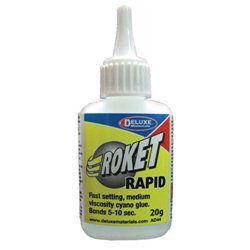
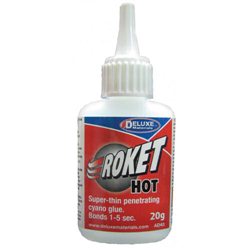
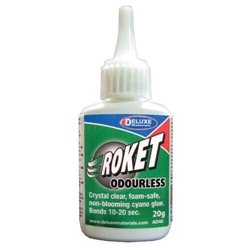
One of the most effective options for securing PE parts is cyanoacrylate or CA glue. This is effectively a form of superglue than is very effective in offering a strong bond. Many modellers will use CA glue especially when a quick bond is required as the glue generally cures very quickly.
Due to its quick cure time CA may not necessarily be the most appropriate medium, especially where longer cure times would be desirable, or for the construction of more elaborate or complicated assemblies. In this case modellers may choose to use PVA or white glue. It will go tacky very quickly but will not cure instantly, it therefore allows a modeller time and scope for precise alignment and fitting.
Posted in: Assembling and gluing
Click here to receive the tips weekly in your mailbox. You can unsubscribe at any time.
Related products
Related posts
-
 Do I need to wash my plastic kit?I personally wash all my plastic kits, I use warm soapy water (Washing up liquid) and a light rub over with a nail...
 - What is Milliput?Milliput is a two-part epoxy putty. There are two different colour rolls in a box when these are mixed together it...
- What modelling tools do I need to get started?Most modellers have an extensive tool kit, a tool for every eventuality. But when first starting a scalpel or a...
- How do I remove parts from the sprue?The short answer is carefully. The best way is with a sprue and plastic cutter but always be mindful of exactly...
- Do I need a cutting mat?It is not essential to have a cutting mat, but it is a good idea. It saves getting in trouble with your significant...