T gauge is the smallest commercially available model railway gauge. It has a scale of either 1:450 or 1:480 and a...

Cart 0 Product Products (empty)
No products
Free shipping! Shipping
£ 0.00 Total
Product successfully added to your shopping cart
Quantity
Total
There are 0 items in your cart. There is 1 item in your cart.
Total products (tax incl.)
Total shipping (tax excl.) Free shipping!
Total (tax incl.)
Search Tips
Tips categories
Latest Tips
-
 What is T gauge in model railways?Read more
 -
 What is the best colour primer to use?Read more
This will depend on what it is you are painting and the colour of the top coat. Never forget that the colour of the...
-
 What is the best type of brush for spreading glue?Read more
Glue is a brush killer, so when using a brush to apply glue, you should always use a brush that you don't care too...
-
 How can I secure cardboard or plastic models to a layout baseboard?Read more
There are several options for securing plastic or card model buildings to a baseboard: Using a strong adhesive such...
-
 What is the difference between Peak Classes 44, 45 and 46 locomotives?Read more
British locomotive classes 44, 45 and 46 were an early design of diesel-electric locomotive intended for mainline...

How can I attach a motorcycle or bicycle figure set to my layout ?
There are a variety of figures that modellers can choose to populate their layouts. One of the key things to bear in mind when attaching figures is what is the size of the surface area of the figure to be attached. An adult figure in a standing pose offers a relatively small surface area for attachment but this is offset by the fact that the weight of the figure is usually directly above the joint meaning that it will be reasonably stable.
This process can be much more tricky when trying to attach a motorcycle or bicycle with its associated rider to a layout. The surface area for the joint is actually very small, generally quite thin and is more likely to leave a noticeable glue trace than a standing figure. The whole process is exacerbated somewhat if the motorcycle or bicycle is to be positioned taking a corner or bend and is then off the vertical as it leans into the turn.
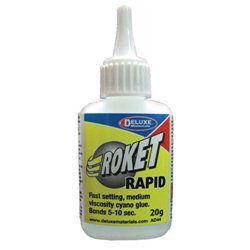
There might be a temptation in this case to use a superglue derivative, as due to its quick action a motorcycle and rider can be quickly positioned. This may well result in a join that works but superglues offer a strong but brittle joint that is vulnerable to being knocked and has less resistance to changes in temperature than other adhesives.
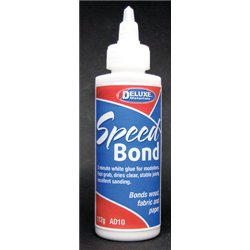
Polyvinyl Acetate (PVA) glue and UHU will generally offer a strong joint with some elasticity. The issue with both of these options is that they take a much longer time to cure and so the machine and rider may well require some form of temporary brace to hold them in place whilst the glue properly cures.
Epoxy-based adhesives such as Gorilla Weld or Speed Epoxy offer a very strong bond but inevitably will take some to cure. As mentioned above in the case of PVA and UHU this will inevitably require the machine and rider to be temporarily braced in position whilst the adhesive cures. Some Epoxy adhesives are not ideal for use with plastics as they can end up damaging plastic-based materials so it is always good to check with the supplier or test on scrap materials first.
It is much easier to secure the machine and rider to the layout if they are to be positioned upright. What can help with this is to create a very small groove where the wheels of the machine are to be placed. This can help with positioning and can allow an adhesive to gain better traction by using capillary action between the figure and the groove.
Posted in: Assembling and gluing
Click here to receive the tips weekly in your mailbox. You can unsubscribe at any time.
Related products
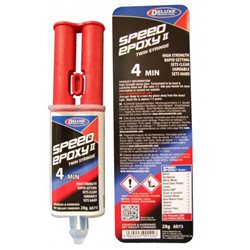
DISC**Speed Epoxy II (28g Syringe)
Price: £ 9.50Speed Epoxy II - Twin syringe (28g) High Strength epoxy glue.
Related posts
-
 Do I need to wash my plastic kit?I personally wash all my plastic kits, I use warm soapy water (Washing up liquid) and a light rub over with a nail...
 - What is Milliput?Milliput is a two-part epoxy putty. There are two different colour rolls in a box when these are mixed together it...
- What modelling tools do I need to get started?Most modellers have an extensive tool kit, a tool for every eventuality. But when first starting a scalpel or a...
- How do I remove parts from the sprue?The short answer is carefully. The best way is with a sprue and plastic cutter but always be mindful of exactly...
- Do I need a cutting mat?It is not essential to have a cutting mat, but it is a good idea. It saves getting in trouble with your significant...