When it comes to lighting your model railway, the choice of bulb type and colour temperature can make a significant...

Cart 0 Product Products (empty)
No products
Free shipping! Shipping
£ 0.00 Total
Product successfully added to your shopping cart
Quantity
Total
There are 0 items in your cart. There is 1 item in your cart.
Total products (tax incl.)
Total shipping (tax excl.) Free shipping!
Total (tax incl.)
Search Tips
Tips categories
Latest Tips
-
 Which bulb types and colour temperature do I need on my model railway layout?Read more
 -
 What is a railway tunnel portal?Read more
The dictionary defines a portal as an entrance to something and is often grand or imposing in appearance. A railway...
-
 How can I stop light shining through wall joints or the base of a building?Read more
There are several ways to overcome the problem of lights shining through narrow gaps around the base of a model...
-
 What is the difference between square and round signal posts?Read more
Originally in the UK, signal posts were constructed from wood and square in shape.The later round signal posts...
-
 What is the difference between 45xx Class and Class 45?Read more
The question: What is the difference between a 45xx Class and a Class 45? should really be: What isn't the...

Can a locomotive motor become weaker and lose power over time?
Model locomotives can become weaker over time, but finding the cause is seldom a cut and dry case.
There are many reasons why a model railway locomotive may lose some of its power over time. Unfortunately, no single reason offered here is likely to give you a quick fix to the problem. It's much more likely that a combination of factors contributes to any power loss, especially on older engines.
But to give you an idea, power loss can result from any, or a combination of, five problem areas. These are: conductivity, friction, magnetism, wrong oil and perception.
Starting with perception. This is not so much a problem with the locomotive, but it is a problem nonetheless. Many older locomotives tend to run noisily, suffer dreadfully from coging and seem to lack power. That may not necessarily be the fault of the model. Many locomotives designed and built before the '80s or '90s never ran like the models of today, even when they were new. If such a locomotive in your collection is running badly, a good service and some new brushes will do wonders for its performance, but you should never expect it to run like a brand new modern loco.
Next up is conductivity and friction. These are self-explanatory, if your cogs and bearings are all dried out, corroded or worn, friction will be caused resulting in a loss of tractive effort. If your pickups or electrical connections are of a similar state, your motor cannot draw the current needed to create power. Make sure all conductive components are clean and make good contact. You should also make sure all friction generating components are smooth, free from dirt or corrosion and lightly lubricated.
The next problem area is magnetism. All electric motors used in model railway locomotives require a permanent magnet of some kind for the motor to operate. To be fair, it takes decades for the magnet to lose its magnetism to any great effect, but that process can be greatly accelerated if the motor has ever been stripped down or otherwise interfered with at any time in the past. Having your motor re-magnetised is an option, but generally, cleaning and other maintenance measures should be tried first.
Lastly, the wrong oil can also cause problems. If an oil that is too thick has been used to service the locomotive, the chances are it never penetrated its intended target. Also, if a non-conductive oil was used to lubricate axle bearings which also serve as pickups, conductivity may have been affected. Always use the correct oil for the job to keep locos happy and running correctly.
There are many reasons why a model railway locomotive may lose (or appear to lose) some of its power, but many can be avoided with good maintenance and the use of the correct materials.
Posted in: Fix, restore and customize
Click here to receive the tips weekly in your mailbox. You can unsubscribe at any time.
Related products
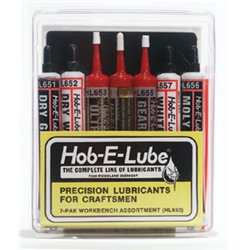
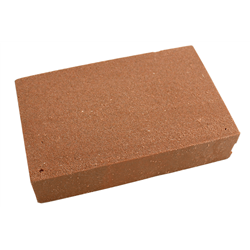
Jumbo Track Cleaner (Aluminium Oxide in Pure...
Price: £ 12.95Jumbo Track Cleaner (Aluminium Oxide in Pure Rubber) Its not only HUGE (big...
Related posts
-
 How to remove super glue (cyanoacrylate)?Cyanoacrylate is best known as super glue. The best way to remove it is with acetone or an acetone-based product...
 - What are ejector pins?Ejector pins are used in the injection moulding process of the manufacturing of plastic kits and die cast kits. They...
- How do I bend plastic?BEWARE RISK OF BURNS With most plastic, hot water is usually enough to bend it. If you are straightening weapon...
- How do I remove paint from a model?In the past some people have said to use oven cleaner to remove paint. I have found that this is quite an evasive...
- What is kit bashing?Kit bashing is when you take two or more model kits to make something unique to you. This may include parts that you...