Sometimes, we spend more time trying to remove paint than we do applying it in the first place. Whether it is because...

Cart 0 Product Products (empty)
No products
Free shipping! Shipping
£ 0.00 Total
Product successfully added to your shopping cart
Quantity
Total
There are 0 items in your cart. There is 1 item in your cart.
Total products (tax incl.)
Total shipping (tax excl.) Free shipping!
Total (tax incl.)
Search Tips
Tips categories
Latest Tips
-
 How can I wash off acrylic paint from unwanted places?Read more
 -
 What colours should I use to create realistic-looking tracks for tanks and other armoured vehicles?Read more
Creating realistic-looking tracks for tanks and other armoured vehicles is an important aspect of scale modelling. To...
-
 What is dry brushing?Read more
We are often advised to dry-brush models to achieve particular effects, but what is dry brushing, and when would you...
-
 What is the British Rail TOPS system?Read more
The TOPS system (Total Operations Processing System) is a computerised system used to keep track of a...
-
 What is a fogman?Read more
A 'fogman' was a railway worker tasked with laying detonators (fog signals) on railway tracks during snowy, foggy or...

What scale is 54mm?
Scale can be a difficult subject to get your head around, this is because scale is portrayed in different ways depending on what model is being described and as if that wasn't confusing enough, there are also many ways to represent what scale a model is, from ratio to comparative measurements.
54mm scale is generally the preserve of larger Wargame figures. In wargaming, the scale (in this case 54mm) represents the measurement of a figure between its shoes and its eye-line (not the top of its head presumably to prevent headwear from influencing the scale).
This may seem like a strange way to represent scale as it would lead to men, women, children and elderly figures all measuring in at 54mm plus a forehead. To combat this, the measurement is representative of the average man within the range, so typically 6ft (1.80m) tall in real life. This equates to about 1/32 scale.
54mm wargame figures are some of the larger scale-figures available in the hobby and are often sought after by modellers with an interest in detailing or accurately painting the models (that's not to say they don't get played with). For wargames that require platoons or larger groups of figures to make moves, the scale would not be cost-effective or space-sensitive so smaller scales as little as 2mm are more appropriate for such games.
Posted in: Painting
Click here to receive the tips weekly in your mailbox. You can unsubscribe at any time.
Related products
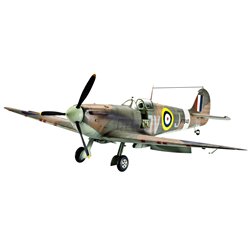
Spitfire MK11 - 1/32
Price: £ 29.60Spitfire MK11 - 1/32Number of parts:115 Length:286 mm Wingspan:351 mm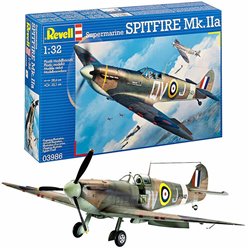
Supermarine Spitfire Mk.IIa - 1/32 model kit
Price: £ 24.99Supermarine Spitfire Mk.IIa Scale: 1/32 Number of Parts 115 + decals...
Related posts
-
 Do I need to use a primer?For best results it is advisable to use a primer as this will stick to the plastic and give a uniform coat of paint...
 - What is weathering?Weathering is a painting technique used by modellers to create the appearance of dirt and grime and even damage to...
- How do I clean brushes used with enamel paint?Enamel paint is solvent based, so trying to wash in water will not work, you need to use white spirit. It is...
- How do I fill holes in a model?There are many products on the market for filling holes: There are plastic putties straight out of the tube, there...
- What is the best size paintbrush?This would depend on what you are painting as paint brushes come in various shapes and sizes. I would say for...