Creating undulating terrain and hills can add depth and realism to a layout. Here are a few methods that can be used...

Cart 0 Product Products (empty)
No products
Free shipping! Shipping
£ 0.00 Total
Product successfully added to your shopping cart
Quantity
Total
There are 0 items in your cart. There is 1 item in your cart.
Total products (tax incl.)
Total shipping (tax excl.) Free shipping!
Total (tax incl.)
Search Tips
Tips categories
Latest Tips
-
 How can I create undulating terrain and hills on my layout ?Read more
 -
 What is the difference between a boat and a ship?Read more
Finding cut and dry, black or white or definitive rules that without doubt define a vessel as a boat or a ship is not...
-
 When and where are sleeper built buffer stops used?Read more
Sleeper-built buffer stops, commonly used in railway systems, serve as an essential safety mechanism at the end of...
-
 What is a servomotor?Read more
There are different types of electric motors, the type that most modellers are accustomed to is the one that makes...
-
 What is the best paint for plastic kits?Read more
There are many types of paint that can be used on plastic kits, and the best choice will depend on the specific...

What is 28mm Scale?
28mm scale or 1/56th scale is mainly used for wargaming figures. This means that a typical figure is 28mm tall and 1/56 means the model is 56 times smaller than the real thing.
The scale is larger than 1/76th scale (OO gauge) and smaller than 1/32nd scale.
Different manufacturers of figures have different ways of measuring the size: some measure from the base to the eyes while others measure to the top of the head minus head gear.
Bear that in mind if you plan on mixing figures and vehicles from several manufacturers to avoid scale inconsistencies.
Posted in: Kit building
Click here to receive the tips weekly in your mailbox. You can unsubscribe at any time.
Related products
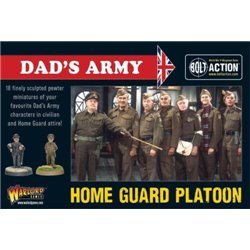
DISC***DISC************Dad's Army
Price: £ 40.00During the dark days of 1940, Britain was under dire threat of Nazi invasion....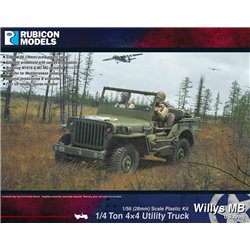
Willys MB 1/4 ton 4x4 Truck - US
Price: £ 19.00Willys MB 1/4 ton 4x4 Truck - US The Willys MB (commonly known as a Jeep or...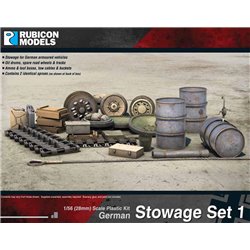
German Stowage Set (WWII Diorama Accessories) -...
Price: £ 14.00Rubicon 28mm wargame models. German Stowage Set (WWII Diorama Accessories) -...
Related posts
-
 Do I need to wash my plastic kit?I personally wash all my plastic kits, I use warm soapy water (Washing up liquid) and a light rub over with a nail...
 - What is Milliput?Milliput is a two-part epoxy putty. There are two different colour rolls in a box when these are mixed together it...
- What modelling tools do I need to get started?Most modellers have an extensive tool kit, a tool for every eventuality. But when first starting a scalpel or a...
- How do I remove parts from the sprue?The short answer is carefully. The best way is with a sprue and plastic cutter but always be mindful of exactly...
- Do I need a cutting mat?It is not essential to have a cutting mat, but it is a good idea. It saves getting in trouble with your significant...