Creating rust streaks on well-used wagons and scrapped vehicles is a great way to add realism to your model railway...

Cart 0 Product Products (empty)
No products
Free shipping! Shipping
£ 0.00 Total
Product successfully added to your shopping cart
Quantity
Total
There are 0 items in your cart. There is 1 item in your cart.
Total products (tax incl.)
Total shipping (tax excl.) Free shipping!
Total (tax incl.)
Search Tips
Tips categories
Latest Tips
-
 How do I create rust streaks?Read more
 -
 How can I best cut masking tape into circles of a specific size?Read more
Cutting masking tape into circles of a specific size can be a bit tricky but there are a few methods that can make...
-
 What is a Metcalfe kit?Read more
Metcalfe is a family run business founded during the early 1990s. They produce 00/H0 and N gauge card kits for model...
-
 What is point rodding in model railways?Read more
Point rodding is a system of rods and bars that physically joins the lever of a signal box or ground frame with a set...
-
 How can I easily clean track in a tunnel?Read more
Cleaning tracks in a tunnel on a model railway can be challenging due to the limited access and confined space....

How to fit drivers in locomotives
Installing a driver or fireman into your locomotive can really bring it to life and add realism. After all, in real life, if you saw a steam locomotive hurtling down the tracks without a crew on board, then something has gone very wrong!
Fitting them is easy too, and involves nothing more than glueing them to the footplate of a steam locomotive or removing the bodyshell and planting one in the driver's seat if using a diesel. The glue you use is up to you, typically, model drivers are available in plastic or white metal (the latter requiring a stronger glue) but if you are intending to remove the crew at some point, then you might want to consider using a product such as Tacky Wax that will hold the figure in place temporarily but allow you to easily remove it at a later date should you wish.
You can get driver and fireman figures painted or unpainted and in several styles depicting different eras, so have a good rummage at your local model shop to find one that is right for your loco.
Click here to receive the tips weekly in your mailbox. You can unsubscribe at any time.
Related products
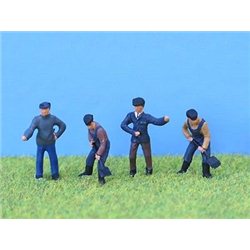
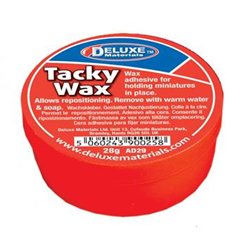
Tacky wax
Price: £ 7.00Tacky wax 28g Wax adhesive for holding miniatures (and especially figures) in...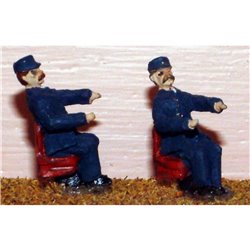
Set of two painted Diesel Locomotive Drivers /...
Price: £ 8.40Set of two OO gauge Diesel engine drivers. Set includes two seated white...
Related posts
-
 Do I need a respirator?If you are using an aerosol spray paint you should always use one. Always read the manufacturer’s...
 - How to remove super glue (cyanoacrylate)?Cyanoacrylate is best known as super glue. The best way to remove it is with acetone or an acetone-based product...
- What is the best wood for baseboards?The most common wood for baseboards is probably chipboard as this is relatively inexpensive. Plywood is another...
- How do I stick parts together for a test fit?There are several trains of thought on the best way to secure parts together temporarily. Some suggest using a small...
- How to clean model railways track?There is of course the old tried and tested method, the track rubber which does the job, no railway modeller should...