The term 'Jinty' refers to a specific type of steam locomotive that was commonly used in the United Kingdom....

Cart 0 Product Products (empty)
No products
Free shipping! Shipping
£ 0.00 Total
Product successfully added to your shopping cart
Quantity
Total
There are 0 items in your cart. There is 1 item in your cart.
Total products (tax incl.)
Total shipping (tax excl.) Free shipping!
Total (tax incl.)
Search Tips
Tips categories
Latest Tips
-
 What type of locomotive is a 'Jinty' and what were they used for ?Read more
 -
 How can I keep parts in place during gluing?Read more
When gluing parts, it is best to hold them in place especially if it is a large area you need to join together, such...
-
 How do I paint my model railway baseboard?Read more
To paint your model railway baseboard, follow these steps to ensure a professional finish that complements your...
-
 What do I need to add sound to my model locomotive?Read more
Adding sound to a model railway locomotive can add another dimension of realism and enjoyment for the viewer, but how...
-
 Historical accuracy in railway modelling: tips and tricksRead more
Railway modelling is a rewarding hobby that combines creativity, craftsmanship, and a passion for trains. For many,...

How do I clean an airbrush after painting a scale model?
Keeping your airbrush clean is very important and you need to do it straight after using it. Even a tiny bit of dried paint left can really mess up how well your airbrush works and make the paint spray come out all wrong.
First off, clean out the paint cup or jar with a bit of kitchen roll, getting out as much paint as you can. Then half fill the cup with airbrush cleaner (or thinners if you don't have cleaner). Spray that through into some kitchen roll until you can't see any paint coming out.
Next, hold a piece of kitchen roll over the needle tip and pull the trigger. This forces air and cleaner back through the airbrush, clearing any dried paint that's stuck inside. You'll see bubbles forming in the cup as it's pushing the cleaner back out.
Do this full cleaning routine every single time after you've been airbrushing. It's vital for keeping your airbrush in tip-top shape and spraying properly.
Every now and then, you'll need to strip the airbrush right down and give it a really good deep clean. Take the needle and nozzle off and leave them soaking overnight in some cleaner solution.
Be really careful with the needle tip though - if you damage or bend it even a tiny bit, your airbrush will never spray right again until you get a new needle fitted.
Click here to receive the tips weekly in your mailbox. You can unsubscribe at any time.
Related products
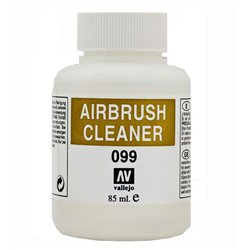
Model Air - Airbrush Cleaner 85ml
Price: £ 3.99Model Air - Airbrush Cleaner 85mlDeveloped especially for airbrush...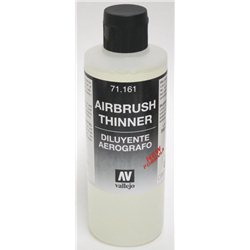
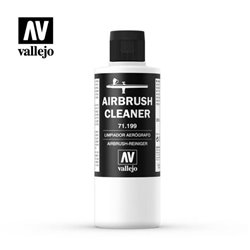
AV Vallejo Model Air - Airbrush Cleaner 200ml
Price: £ 8.75AV Vallejo Model Air - Airbrush Cleaner 200ml
Related posts
-
 Do I need to use a primer?For best results it is advisable to use a primer as this will stick to the plastic and give a uniform coat of paint...
 - What is weathering?Weathering is a painting technique used by modellers to create the appearance of dirt and grime and even damage to...
- How do I clean brushes used with enamel paint?Enamel paint is solvent based, so trying to wash in water will not work, you need to use white spirit. It is...
- How do I fill holes in a model?There are many products on the market for filling holes: There are plastic putties straight out of the tube, there...
- What is the best size paintbrush?This would depend on what you are painting as paint brushes come in various shapes and sizes. I would say for...