When it comes to painting model railways, aerosol-based paints and sprays have several advantages over airbrush and...

Cart 0 Product Products (empty)
No products
Free shipping! Shipping
£ 0.00 Total
Product successfully added to your shopping cart
Quantity
Total
There are 0 items in your cart. There is 1 item in your cart.
Total products (tax incl.)
Total shipping (tax excl.) Free shipping!
Total (tax incl.)
Search Tips
Tips categories
Latest Tips
-
 What advantages do aerosol-based paints and sprays have when compared to airbrush and brush applied alternatives?Read more
 -
 Do I need to varnish after applying a decal?Read more
The simple answer is yes, it is advisable to varnish your decal, for a couple of reasons One being that if the model...
-
 How do I use a multimeter?Read more
With so many functions on a modern or advanced multimeter, and so many reasons why you may want to use one, it would...
-
 What are my options for motorising points on an N Gauge layout?Read more
There are several options for motorising points on an N Gauge layout. Here are some of the most common methods:...
-
 What different types of layout are there?Read more
There are many ways in which you can construct your layout, there are several common types that have names you might...

What is flock as used for scale modelling?
In scale modelling, "flock" refers to finely ground fibres or particles used to simulate textures such as grass, foliage or other surfaces in miniature landscapes and dioramas. This material is essential for creating realistic and immersive environments in various types of models, including railway layouts, architectural models and wargaming terrains. By using flock, you can add a significant level of detail and authenticity to their projects, making scenes come to life in a visually compelling way. The versatility and ease of use make flock a popular choice among hobbyists and professionals alike.
Flock is available in a wide range of colours and textures, enabling you to achieve different effects and levels of detail. For instance, green flock can be used to mimic grass, while brown or autumnal shades can represent dead leaves or soil. There are also options for more specialised applications, such as snow, sand or even alien landscapes. The variety allows for precise customisation of the model's environment, ensuring that every scene can be as unique and accurate as the modeller desires. The choice of flock can greatly influence the overall aesthetic and realism of the finished project.
The application of flock is relatively straightforward, making it accessible to modellers of all skill levels. Typically, a layer of adhesive is applied to the area where the flock is desired. The flock is then sprinkled or spread over the adhesive, where it sticks and creates the desired texture. Some modellers use specialised applicators to achieve more uniform coverage or to create specific effects, such as applying static grass, which stands upright to more realistically mimic the appearance of real grass. Once the adhesive dries, any excess flock can be gently brushed away, leaving a textured, lifelike surface.
Flock can also be used in combination with other materials to enhance the visual realism of a model. For example, it can be layered over foam or mixed with other textures like static grass to create varied and complex terrains. This layering technique is particularly useful for creating natural-looking landscapes with depth and dimension. Additionally, different grades of flock, from fine to coarse, can be used to represent various types of ground cover and vegetation. By experimenting with different combinations and techniques, you can achieve highly detailed and realistic results, making their miniature worlds truly captivating.
Posted in: Scenery
Click here to receive the tips weekly in your mailbox. You can unsubscribe at any time.
Related products
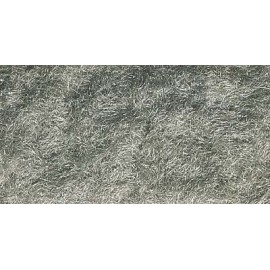
Light Green Flock
Price: £ 17.25Light Green FlockUse it to create dormant or dying grasses or weeds.57.7 in³...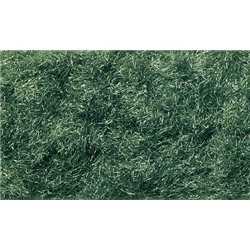
Dark Green Flock
Price: £ 17.25Dark Green FlockUse it to create dormant or dying grasses or weeds.57.7 in³...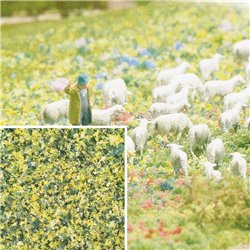
Related posts
-
 Is static grass better than scatter?I use both, separately and together. Static grass comes in various sizes from 0.5mm to 12mm while scatter is...
 - How do I apply static grass?Static grass is best applied using a static grass applicator. There are several on the market and they can apply...
- What colour are tree trunks?Tree trunks are actually grey in colour and not brown as you would think. The next time you are out and about just...
- How to make hills?You can make hills in a variety of ways. The tried and tested way is with chicken wire and papier mache. This is a...
- How do I glue scatter?Select the area where you want the scatter, then apply a layer of PVA glue, sprinkle your grass covering the glue....