There are many reasons why model trains derail, sometimes it's a track fault, sometimes it's because the train isn't...

Cart 0 Product Products (empty)
No products
Free shipping! Shipping
£ 0.00 Total
Product successfully added to your shopping cart
Quantity
Total
There are 0 items in your cart. There is 1 item in your cart.
Total products (tax incl.)
Total shipping (tax excl.) Free shipping!
Total (tax incl.)
Search Tips
Tips categories
Latest Tips
-
 Why does my train keep derailing?Read more
 -
 Should I use a brush to apply varnish?Read more
When applying varnish to protect a model's paintwork, you should aim for a finish that exhibits the least amount of...
-
 What is balsa glue and how do I use it?Read more
Balsa glue is a specialised adhesive designed specifically for bonding balsa wood. It's often the preferred choice...
-
 What is Hornby Dublo?Read more
Hornby Dublo was an early brand name for models produced by the company that we now all know as Hornby. The brand was...
-
 What are the filler caps for on the running board of a Jubilee Class?Read more
Railway modellers love details, but sometimes a prototype's details can leave us scratching our heads and wondering...

What is a Maglev system and how does it work?
The word maglev is a portmanteau of 'Magnetic Levitation'. It is a type of transportation technology that uses magnetic fields to suspend and propel vehicles. It is a fascinating innovation that offers a smooth and efficient mode of transportation.
In a maglev system, the vehicles are designed with magnets on the bottom, which repel against magnets on the track. This repulsion creates a levitation effect, lifting the vehicle off the ground and eliminating the need for wheels or traditional tracks. This lack of physical contact between the vehicle and the track reduces friction and allows for higher speeds.
To propel the vehicle forward, the track is equipped with a series of electromagnets. These electromagnets are powered by electricity and are arranged along the track at regular intervals. As the vehicle passes over these electromagnets, they are energized, creating a magnetic field that pushes the vehicle forward. By alternating the polarity of the electromagnets, the vehicle can be propelled in either direction.
The control of the magnetic fields and the propulsion system is managed by a sophisticated computer system that ensures smooth and precise movement of the vehicles. This computer system constantly monitors and adjusts the magnetic fields to maintain stability and control the speed of the vehicles.
Maglev systems offer several advantages over traditional transportation systems. They can achieve very high speeds, with some systems reaching speeds of over 300 miles per hour. Additionally, they are quieter and smoother than traditional trains since there is no physical contact between the vehicle and the track. Maglev systems also have the potential to be more energy-efficient and environmentally friendly, as they do not rely on fossil fuels for propulsion.
It's worth noting that there are different types of maglev systems, with varying designs and technologies. Some systems use superconducting magnets, which require extremely low temperatures to operate, while others use electromagnetic systems that operate at room temperature. The specific design and technology used can vary depending on the country and the purpose of the Maglev system.
Overall, maglev systems are an exciting and innovative form of transportation that utilizes magnetic fields to achieve levitation and propulsion. They offer the potential for fast, quiet and efficient transportation and could play a significant role in the future of transportation infrastructure.
Posted in: Rolling stock
Click here to receive the tips weekly in your mailbox. You can unsubscribe at any time.
Related product
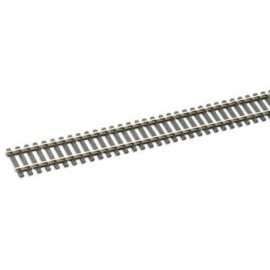
Peco Streamline OO gauge Flexible Track - Code 100
Price: £ 6.40OO gauge Peco Streamline Code 100 Flexible Track with wooden effect...
Related posts
-
 How to weight my model so it does not tip?For wargaming figures, a small coin or washer glued to the under side of the base will usually to do the job. This...
 - Is Bachmann compatible with Hornby?Yes, any OO scale loco, wagon or coach will work on any OO scale track, regardless of brand. Couplings are also...
- What are tension lock couplings?Tension lock couplings are the standard couplings for model trains in the UK. These are the ones we all know from...
- How do I test the width between the wheels of my engines?The best way to check the wheels of your locomotives is to use a tool called a back to back gauge. They are...
- How do I clean the wheels of my engine?One easy way is to get yourself a Peco cleaning kit containing a wire brush, wheel scraper, foam cradle and oil. The...