When it comes to model railways, the choice of point motors can greatly impact the performance and realism of a...

Cart 0 Product Products (empty)
No products
Free shipping! Shipping
£ 0.00 Total
Product successfully added to your shopping cart
Quantity
Total
There are 0 items in your cart. There is 1 item in your cart.
Total products (tax incl.)
Total shipping (tax excl.) Free shipping!
Total (tax incl.)
Search Tips
Tips categories
Latest Tips
-
 What advantages would a slower-acting point motor offer to my layout ?Read more
 -
 What is a snap together model kit?Read more
A snap together model kit is a type of model assembly kit where the pieces simply snap together without the need for...
-
 What is the difference between a Flow Improver and a Flow Retarder and when would I typically use them?Read more
Flow improver and flow retarder are both additives that can be added to acrylic paint when airbrushing to help...
-
 Are model railway layouts dangerous because of the use of electricity?Read more
Model railway layouts can be dangerous if they are not properly designed, constructed and maintained. Electrical...
-
 Is airbrushing better than hand painting?Read more
Both methods have their pros and cons. It takes a little practice to get proficient in using an airbrush but once...

Where would I generally place a level-crossing on my layout?
When planning the placement of a level crossing on a model railway layout, there are a few factors to consider. The location of a level crossing can add realism and interest to the layout, as well as provide a functional scene element for the operation of the layout's trains. Here are some guidelines to help decide where to place a level crossing :
- Road or track intersection : level crossings are typically placed where a road or path intersects at the same height with a railway track. This creates a realistic scenario where vehicles and trains can interact. Consider the configuration of the Layout's tracks and roads to find a suitable location for the level crossing.
- Visibility : it is important to ensure good visibility for both train operators and road users at the level crossing. Avoid placing the crossing on a sharp curve of road or track or where there are objects that could obstruct the view for either party. This will better reflect the placement of a level-crossing in the real world.
- Access points : level crossings often serve as access points for vehicles to cross the tracks. Consider placing the level crossing near buildings or areas where people would need to cross the tracks. This will add authenticity to the layout and make it more engaging. This could be a main road in an urban setting or a cattle or livestock crossing in a rural environment.
- Safety measures : in real life, level crossings have safety measures such as barriers, lights and warning signs. These safety features can be added to the layout to enhance realism. Ensure there is enough space to accommodate these safety features when choosing the location for the level crossing.
- Scale considerations : the scale of the layout will also influence the placement of the level crossing. Different scales, such as OO/HO, N and TT have different track spacing and dimensions. Consider the scale of the layout and ensure that the level crossing fits proportionally with the rest of the scenery.
By considering these factors, it will be possible to identify a suitable location for a level crossing on a layout. Remember to plan ahead and make adjustments as needed to ensure that the level crossing is not only functional but also realistically positioned.
Posted in: Scenery
Click here to receive the tips weekly in your mailbox. You can unsubscribe at any time.
Related products
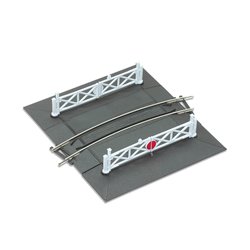
Curved (No.1 radius ) Level Crossing, complete...
Price: £ 16.25Curved (No.1 Rad.) Level Crossing, complete with 2 ramps & 4 gatesPeco...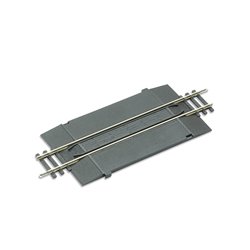
Straight Addon Track Unit for level crossing
Price: £ 8.90Straight Addon Track Unit for level crossing Peco Setrack level crossings are...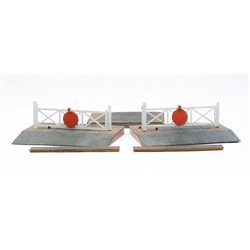
Related posts
-
 Is static grass better than scatter?I use both, separately and together. Static grass comes in various sizes from 0.5mm to 12mm while scatter is...
 - How do I apply static grass?Static grass is best applied using a static grass applicator. There are several on the market and they can apply...
- What colour are tree trunks?Tree trunks are actually grey in colour and not brown as you would think. The next time you are out and about just...
- How to make hills?You can make hills in a variety of ways. The tried and tested way is with chicken wire and papier mache. This is a...
- How do I glue scatter?Select the area where you want the scatter, then apply a layer of PVA glue, sprinkle your grass covering the glue....