There are many reasons why model trains derail, sometimes it's a track fault, sometimes it's because the train isn't...

Cart 0 Product Products (empty)
No products
Free shipping! Shipping
£ 0.00 Total
Product successfully added to your shopping cart
Quantity
Total
There are 0 items in your cart. There is 1 item in your cart.
Total products (tax incl.)
Total shipping (tax excl.) Free shipping!
Total (tax incl.)
Search Tips
Tips categories
Latest Tips
-
 Why does my train keep derailing?Read more
 -
 Should I use a brush to apply varnish?Read more
When applying varnish to protect a model's paintwork, you should aim for a finish that exhibits the least amount of...
-
 What is balsa glue and how do I use it?Read more
Balsa glue is a specialised adhesive designed specifically for bonding balsa wood. It's often the preferred choice...
-
 What is Hornby Dublo?Read more
Hornby Dublo was an early brand name for models produced by the company that we now all know as Hornby. The brand was...
-
 What are the filler caps for on the running board of a Jubilee Class?Read more
Railway modellers love details, but sometimes a prototype's details can leave us scratching our heads and wondering...

As a novice modeller, what is the best scale to model armour subjects in ?
The best scale to model armour subjects will depend to some degree on the personal preferences of the individual modeller, the complexity of the kit and the level of detail they want to achieve. However, two popular scales for armour modelling are 1/35 and 1/72.
1/35 scale is commonly known as the "standard" scale for armour modelling. It offers a good balance between size and detail. With this scale, modellers can achieve a high level of detail on the individual parts of the model, such as the tracks, wheels, and small accessories. It also allows for easier painting and weathering techniques due to the larger size.
On the other hand, 1/72 scale is smaller and more compact. It is sometimes referred to as "braille scale" due to the small size of the parts. While it may be more challenging to work with due to its size, it allows for the creation of dioramas with larger scenes and more vehicles in a limited space. It is also more affordable compared to 1/35 scale models.
Ultimately, the choice between these two scales comes down to personal preference, kit complexity, the level of detail the modeller wishes to achieve and which provides the most enjoyment and personal satisfaction. A useful strategy could be to start in 1/72 to gain experience and then attempt a 1/35 scale kit. This would allow a modeller to compare the pros and cons of both scales and enable them to make a more informed and balanced choice.
Posted in: Best practices
Click here to receive the tips weekly in your mailbox. You can unsubscribe at any time.
Related products
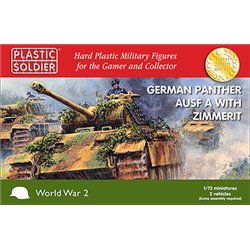
DISC**1/72nd Panther Ausf A with zimmerit
Price: £ 26.401/72nd Panther Ausf A with zimmerit 1/72nd Easy Assembly Panther Ausf A with...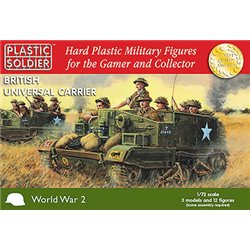
DISC**WW2 Easy Assembly 1/72nd British...
Price: £ 25.40WW2 Easy Assembly 1/72nd British Universal Carrier Easy Assembly 1/72nd...
Related posts
-
 Do I need a respirator?If you are using an aerosol spray paint you should always use one. Always read the manufacturer’s...
 - How to remove super glue (cyanoacrylate)?Cyanoacrylate is best known as super glue. The best way to remove it is with acetone or an acetone-based product...
- What is the best wood for baseboards?The most common wood for baseboards is probably chipboard as this is relatively inexpensive. Plywood is another...
- How do I stick parts together for a test fit?There are several trains of thought on the best way to secure parts together temporarily. Some suggest using a small...
- How to clean model railways track?There is of course the old tried and tested method, the track rubber which does the job, no railway modeller should...