Cross lock tweezers are for all intense purposes regular tweezers, they are roughly the same size and are used for...

Cart 0 Product Products (empty)
No products
Free shipping! Shipping
£ 0.00 Total
Product successfully added to your shopping cart
Quantity
Total
There are 0 items in your cart. There is 1 item in your cart.
Total products (tax incl.)
Total shipping (tax excl.) Free shipping!
Total (tax incl.)
Search Tips
Tips categories
Latest Tips
-
 What are cross lock tweezers?Read more
 -
 How can I best build a compact N gauge layout ?Read more
Building a compact N gauge layout can be a rewarding and challenging project. N gauge is a popular choice for those...
-
 In railways, what is a Palvan?Read more
PalVans, or 'Pallet Vans' were introduced in the 1950s as a method of loading the increasing amounts of cargoes...
-
 In railways, what is an insulated van?Read more
There are hundreds of different wagon types operated on UK railways. One numerous older type commonly seen in model...
-
 Can you get plug and play colour signals for DCC?Read more
Wiring colour light signals to a DCC layout can be a little daunting when doing it for the first time. That's because...

What are inspection pits and where would I install one on my layout?
An inspection pit is a feature commonly found in model railway layouts that mimics real-life railway workshops. It is essentially a recessed area in the ground that allows for easy access to the underside of trains or rolling stock for maintenance and inspection purposes.
In model railways, inspection pits are often included to add a realistic touch to the layout. They are typically located in engine sheds or maintenance depots, where trains can be brought in for servicing and repairs. The pit provides a convenient way for engineers to access the wheels, gears, and other underside components of the trains at a comfortable height and without having to lift them off the tracks.
Some manufacturers produce inspection pit models, thus allowing a modeller to integrate these features into their layouts. In addition to the pit itself, these kits include additional metal rails allowing for physical and electrical connection to the layout, meaning that locomotives can be driven into and out of the workshop environment.
When purchasing a kit it is important to check that the included rails are code compatible with the track sections of the layout. Additionally, some kits may not come with rail connectors which may have to be purchased separately by the modeller.
With careful planning, installing an inspection pit can be a great way for a modeller to add a highly realistic and visually interesting aspect of railway operations to a layout. Painting and weathering the pit and the addition of suitable plastic figure sets can help add additional impact.
Posted in: Model Railway
Click here to receive the tips weekly in your mailbox. You can unsubscribe at any time.
Related products
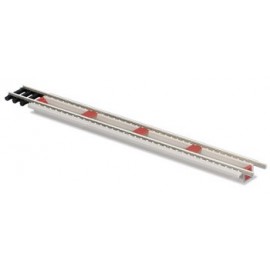
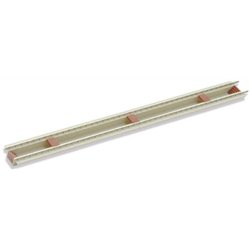
Inspection Pit for engine shed dioramas
Price: £ 15.40A plastic kit to build an inspection pit for your locos and coaches, ideal...
Related posts
-
 What scale is Hornby?Hornby model railways are OO Scale or 1/76th that is 4 millimetres to the foot (12 inches). It runs on a track with...
 - How to weight my model so it does not tip?For wargaming figures, a small coin or washer glued to the under side of the base will usually to do the job. This...
- Is Bachmann compatible with Hornby?Yes, any OO scale loco, wagon or coach will work on any OO scale track, regardless of brand. Couplings are also...
- What are the model railway eras?According to Bachmann, as it states in their catalogue there are 9 eras. As they say in their catalogue this is not...
- Can a "DCC ready" train be used on analogue?Yes, you can use a DCC ready train on your analogue layout. DCC ready just means that the train has been factory...