Hand drills are used in modelling for intricate jobs where a power drill would not provide the delicacy, pace and...

Cart 0 Product Products (empty)
No products
Free shipping! Shipping
£ 0.00 Total
Product successfully added to your shopping cart
Quantity
Total
There are 0 items in your cart. There is 1 item in your cart.
Total products (tax incl.)
Total shipping (tax excl.) Free shipping!
Total (tax incl.)
Search Tips
Tips categories
Latest Tips
-
 What are the benefits of using a hand drill when modelling?Read more
 -
 How long does foam underlay last on average and is there any way to increase its longevity?Read more
The longevity of foam underlay can vary depending on a number of factors such as the quality of the foam, the...
-
 How can I add realistic tyre tracks to muddy terrain?Read more
Adding realistic tyre tracks to muddy terrain in your scale model can enhance the scene’s authenticity and tell a...
-
 In model railways, what is 2FS?Read more
In model railways, 2FS refers to 2mm Finescale or 2mm Scale Finescale. This is a specific modeling standard and scale...
-
 How do I attach figures to my layout?Read more
This depends on what type of figures you are using for your layout. If you are using white metal figures they often...

Why do I need to use underlay under my track?
The main reason for using underlay is to help to reduce the noise on your layout. If you run your train on track placed directly on wood, it resonates a lot and this is amplified by the void under the baseboard.
The second reason is by putting underlay under the track, this will raise the track slightly and give a more realistic look when adding ballast.
If you look at the real thing, the ballast is at least 6in (15cm) deep and can be up to 12in (30cm) deep. Obviously, with model railways, we do not need to use ballast for the same reasons, but raising the track will create the same look.
Click here to receive the tips weekly in your mailbox. You can unsubscribe at any time.
Related products
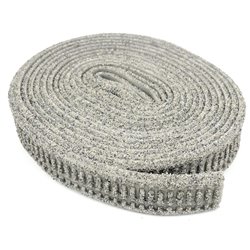
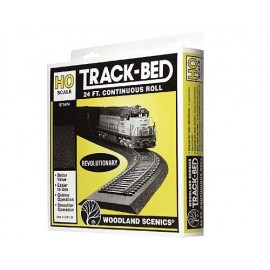
HO Scale Trackbed Roll 24ft.
Price: £ 16.50Totally flat areas of land are very rare in nature. They usually occur as...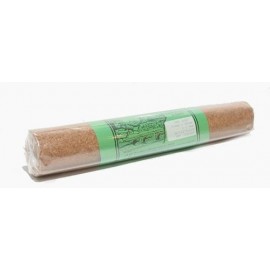
1/8 x 24 x 36 cork sheet
Price: £ 13.40Cork underlay sheetRoll of 1/8" thick (2.5 mm) - 24" X 36" (610mm x 914mm)
Related posts
-
 Do I need a respirator?If you are using an aerosol spray paint you should always use one. Always read the manufacturer’s...
 - How to remove super glue (cyanoacrylate)?Cyanoacrylate is best known as super glue. The best way to remove it is with acetone or an acetone-based product...
- What is the best wood for baseboards?The most common wood for baseboards is probably chipboard as this is relatively inexpensive. Plywood is another...
- How do I stick parts together for a test fit?There are several trains of thought on the best way to secure parts together temporarily. Some suggest using a small...
- How to clean model railways track?There is of course the old tried and tested method, the track rubber which does the job, no railway modeller should...