An autofrog is a type of track switch that is designed to simplify wiring and eliminate the need for additional...

Cart 0 Product Products (empty)
No products
Free shipping! Shipping
£ 0.00 Total
Product successfully added to your shopping cart
Quantity
Total
There are 0 items in your cart. There is 1 item in your cart.
Total products (tax incl.)
Total shipping (tax excl.) Free shipping!
Total (tax incl.)
Search Tips
Tips categories
Latest Tips
-
 What is an autofrog and where would it be used on a layout?Read more
 -
 What is an observation coach?Read more
Observation coaches are a distinctive feature of certain railway services, offering passengers a unique and immersive...
-
 Where is the best place to store my layout when not in use?Read more
One of the trickiest issues with operating a model train layout is where to store it when not in use. There are a...
-
 What is the best size paintbrush?Read more
This would depend on what you are painting as paint brushes come in various shapes and sizes. I would say for...
-
 How do I fit basic light signals to a layout?Read more
If you have never had the pleasure or are new to wiring anything other than a controller to a layout then you are in...

What are the benefits of washing plastic kit parts?
Before starting their next project many modellers will wash the plastic parts of their model kit. This is a sensible precaution as the injection-moulding process used to manufacture plastic kits can leave residues on the parts. These residues generally take the form of a thin film of oil on the surface. If not cleaned away this film can make it more difficult for subsequent layers of paint to adhere to the surface of the parts.
Tepid water with a mild detergent such as washing up liquid is an ideal solution to this problem. Simply immerse the parts in the water and the detergent present in the water will start to work at removing any residues present. The parts can then either be dabbed dry with a soft cloth or alternatively left to drip dry. If drying with a cloth care should be taken not to damage any parts or to break them off their sprues.
This cleaning process is also very useful for removing any grease from fingers especially if the kit parts have been repeatedly or regularly handled prior to assembly and painting.
As previously mentioned care should be taken to ensure that tepid water is used as extremely hot water can potentially distort delicate or fragile parts. That said, hot or very hot water can be used as a deliberate ploy to help correct minor imperfections or distortions or to facilitate minor adjustments when fitting parts.
Posted in: Kit building
Click here to receive the tips weekly in your mailbox. You can unsubscribe at any time.
Related products
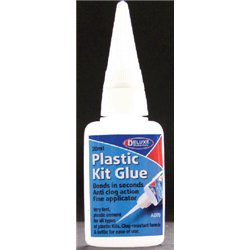
Plastic kit glue
Price: £ 4.95Plastic kit glue Bonds in seconds. Anti clog action. Fine applicator.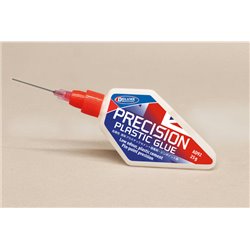
Related posts
-
 Do I need to wash my plastic kit?I personally wash all my plastic kits, I use warm soapy water (Washing up liquid) and a light rub over with a nail...
 - What is Milliput?Milliput is a two-part epoxy putty. There are two different colour rolls in a box when these are mixed together it...
- What modelling tools do I need to get started?Most modellers have an extensive tool kit, a tool for every eventuality. But when first starting a scalpel or a...
- How do I remove parts from the sprue?The short answer is carefully. The best way is with a sprue and plastic cutter but always be mindful of exactly...
- Do I need a cutting mat?It is not essential to have a cutting mat, but it is a good idea. It saves getting in trouble with your significant...