That would very much depend on what it is you are trying to glue the balsa wood to, if you are gluing it to another...

Cart 0 Product Products (empty)
No products
Free shipping! Shipping
£ 0.00 Total
Product successfully added to your shopping cart
Quantity
Total
There are 0 items in your cart. There is 1 item in your cart.
Total products (tax incl.)
Total shipping (tax excl.) Free shipping!
Total (tax incl.)
Search Tips
Tips categories
Latest Tips
-
 How do I glue balsa wood?Read more
 -
 What is an A1A-A1A wheel arrangement?Read more
In the UK, an A1A-A1A wheel arrangement was used on some early designs of diesel railway locomotives, most notably...
-
 How to fit drivers in locomotivesRead more
Installing a driver or fireman into your locomotive can really bring it to life and add realism. After all, in real...
-
 Do cambers help model trains traverse a bend?Read more
In real life, railway tracks tilt slightly as they negotiate curves. The tilt is known by many names, including a...
-
 Is modelling in N gauge cheaper than OO gauge?Read more
Although N gauge is very popular (and for good reason), it can't be denied that the most popular gauge on the UK...

How can I easily model working streetlamps?
There are a few options you can consider when it comes to modelling working streetlamps:
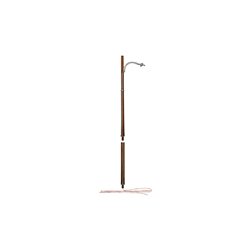
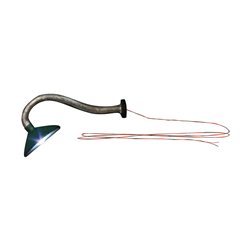
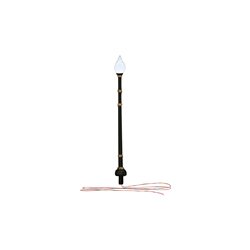
LED streetlamps: LED streetlamps are a popular choice for model railways as they are energy-efficient and produce minimal heat and are a good low-cost option. They are easy to install and can be powered by a separate battery or by the layout's power supply. To make them work, it is a relatively simple process of adding wires to connect the LED streetlamps to the power source and a switch to turn them on and off. The wires can either be supplied directly to the lights in question from underneath the baseboard or can be run across the top and hidden by scene elements such as foliage, buildings or pavements.
Fibre optics: Another option is to use fibre optics to create the effect of working streetlamps. This involves running a fibre optic cable from a central light source to each individual streetlamp. When the light source is turned on, the fibre optic cable will transmit the light to the streetlamp, creating the appearance of a working lamp. This method requires more work and skill to install but the result can be very striking and realistic.
Battery-powered streetlamps: Battery-powered streetlamps are a simple and easy option for model railways and as such are a good option for beginners to consider. They are powered by small batteries and can be easily turned on and off using a switch or remote control. They come in various sizes and styles, making it easy to find options that will match the era and theme of the layout in question.
Whichever method is chosen, it is important to ensure that the streetlamps are properly installed and wired to avoid any safety hazards that could result in damage to the layout. With a bit of planning and creativity, a modeller can easily add the realistic touch of working streetlamps to their layout.
Posted in: Power and control
Click here to receive the tips weekly in your mailbox. You can unsubscribe at any time.
Related products
Related posts
-
 Can a "DCC ready" train be used on analogue?Yes, you can use a DCC ready train on your analogue layout. DCC ready just means that the train has been factory...
 - Is it difficult to fit a DCC decoder in to a DCC ready engine?In theory, it should be easy as the whole idea of being DCC Ready is to simplify the process. The first time I did...
- What is 7/0.2 wire?7/02 wire is a wire made of 7 strands of 0.2mm wire. Stranded wire has the advantage of being flexible while solid...
- Is an N Gauge controller compatible with OO Gauge?Yes, an N Gauge controller is compatible with OO gauge trains. You may have to change the power clip to the track...
- Is stranded wire better than solid wire?In my experience, stranded wire is preferable over solid wire. Stranded wire is more flexible than solid core wire,...