Solenoid point motors are used for throwing the points on your layout. They can also be used for other animations...

Cart 0 Product Products (empty)
No products
Free shipping! Shipping
£ 0.00 Total
Product successfully added to your shopping cart
Quantity
Total
There are 0 items in your cart. There is 1 item in your cart.
Total products (tax incl.)
Total shipping (tax excl.) Free shipping!
Total (tax incl.)
Search Tips
Tips categories
Latest Tips
-
 What are solenoid point motors?Read more
 -
 Can Dapol rolling stock couple to Graham Farish rolling stock?Read more
Modern Graham Farish and Dapol rolling stock should in theory couple together with little problem. This is thanks to...
-
 What is meant by the term 'kitbashing'?Read more
The term "kitbashing" refers to the practice of modifying or combining different model kits or components to create a...
-
 Who are the model manufacturer ICM and what do they specialize in ?Read more
ICM is a well-known model manufacturer that specializes in producing plastic scale models. They have been in the...
-
 What are flatbed wagons used for?Read more
Flatbed wagons, often referred to as flat wagons or flatcars, are railway freight vehicles designed with a flat, open...

How can I slow down the drying time for acrylic paint?
Acrylic paint is widely used by hobbyists as it offers many advantages. It is water soluble which removes the need for hazardous and flammable thinners and cleaners, also it is produced by a wide range of manufacturers and so is relatively abundant and cheap. For those modellers who are new to acrylics its fast drying time may come as a bit of a surprise. This can be problematic, especially when painting large areas as tonal and textual variations can occur as a result of its rapid drying time.
As a result, there are a few ways to slow down the drying time for acrylic paint:
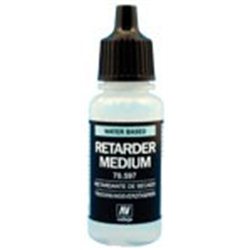
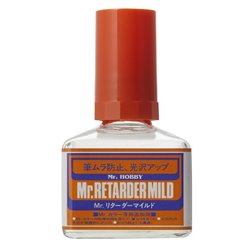
Add a paint extender or retarder to the paint: These products are specifically designed to slow down the drying time of acrylic paint. They can be added in small amounts to the paint to give you more working time. This is especially relevant to airbrush users, as the airflow that delivers the paint to the subject further increases the drying rate, resulting in the paint drying on the airbrush needle. This can disrupt the airflow and result in an uneven paint job. Adding a flow retarder or extender allows the paint to self-level on the model before drying, thus ensuring more even coverage.
Use a humidifier: Acrylic paint dries faster in dry air, so by adding humidity to the air with a humidifier, you can slow down the drying time.
Keep your paint in a cool, shaded area: Acrylic paint dries faster when it's hot and in direct sunlight, so keeping your paint in a cooler and shaded area can help to slow down the drying time.
Cover the paint with a wet cloth or plastic wrap: Covering the paint with a wet cloth or plastic wrap can help to slow down the drying time by keeping the humidity level high.
Keep your brushes and palette wet: If you're using acrylic paint, it's important to keep your brushes and palette wet. This will help to slow down the drying time by thinning the paint slightly and increasing its water content. This additional water will take a little longer to evaporate, thus slowing down the drying time and making your paint easier to work with.
It's important to note that some of these methods may affect the final result of your paint job. It is a good idea to test them out first on scrap material to see what works best for you before entrusting them to your model.
Posted in: Painting
Click here to receive the tips weekly in your mailbox. You can unsubscribe at any time.
Related products
Related posts
-
 Do I need to use a primer?For best results it is advisable to use a primer as this will stick to the plastic and give a uniform coat of paint...
 - What is weathering?Weathering is a painting technique used by modellers to create the appearance of dirt and grime and even damage to...
- How do I clean brushes used with enamel paint?Enamel paint is solvent based, so trying to wash in water will not work, you need to use white spirit. It is...
- How do I fill holes in a model?There are many products on the market for filling holes: There are plastic putties straight out of the tube, there...
- What is the best size paintbrush?This would depend on what you are painting as paint brushes come in various shapes and sizes. I would say for...