For best results it is advisable to use a primer as this will stick to the plastic and give a uniform coat of paint...

Cart 0 Product Products (empty)
No products
Free shipping! Shipping
£ 0.00 Total
Product successfully added to your shopping cart
Quantity
Total
There are 0 items in your cart. There is 1 item in your cart.
Total products (tax incl.)
Total shipping (tax excl.) Free shipping!
Total (tax incl.)
Search Tips
Tips categories
Latest Tips
-
 Do I need to use a primer?Read more
 -
 What scale of people should I use on a cake or floral display?Read more
Model figures are used by many creators of wonderful things, whether it be railway layouts, display dioramas, school...
-
 Is it a good idea to use second-hand track?Read more
Personally, I would never use second hand track as you don't really know what you are getting. Over time track will...
-
 Are there alternatives to using scatter when creating surface vegetation?Read more
One of the most satisfying ways to bring a layout or diorama to life is to blend it into some form of natural...
-
 What are my options for motorising a level crossing on my layout ?Read more
Motorising a level crossing can add a realistic touch to the operation of a layout. There are several options...

How can I make a realistic surface for my diorama?
There are a number of ways to create a suitable surface for a diorama.
Where a large surface area is to be created it is useful to use domestic substances that are cheap are readily available. Paper mache has traditionally been used in the creation of landscapes for layouts and dioramas. It can be laid flat or piled and shaped to create uneven effects. It is also fairly forgiving to work with, meaning that it can also work with other structures. For example, when creating hills it can be expedient to use suitable frame to begin with, such as chicken wire. Paper mache strips can then be laid on top of the chicken wire frame to the required level.
Likewise, sawdust can also be used as the base for a landscape, this can be mixed with PVA glue and spackling compound, also known as gypsum powder. This mixture is hard and durable but also has a slow curing time. This allows a modeller time to shape the surface to the required consistency and then leave it to properly dry and cure overnight.
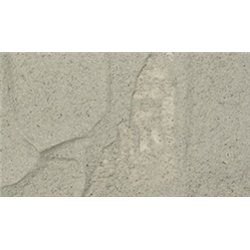
Many modelling manufacturers have produced pastes to help modellers to create realistic-looking landscape surfaces easily. One example of this is the Earth Texture range by Vallejo. These are acrylic-based pastes that can be applied straight from the pot onto a diorama. The advantage of using these pastes is that they are readily available in a range of suitable colours such as dark and light earth and sand. The pastes can be easily applied by brush or spatula and also have adhesive qualities, thus ensuring that they can be used to secure other scene elements in places such as scatter or similar foliage.
These pastes can work well in combination with the other methods mentioned above. They can be used to provide a suitable surface texture on a large either a large or small diorama.
Posted in: Scenery
Click here to receive the tips weekly in your mailbox. You can unsubscribe at any time.
Related products
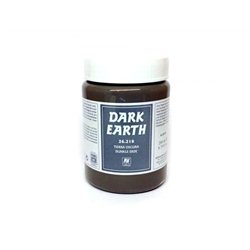
Stone Textures - Dark Earth 200ml
Price: £ 10.75Stone Textures - Dark Earth 200ml Vallejo Dark Earth is made from sand and...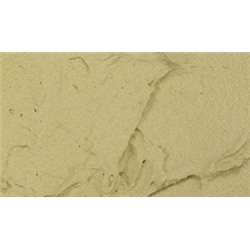
Related posts
-
 Is static grass better than scatter?I use both, separately and together. Static grass comes in various sizes from 0.5mm to 12mm while scatter is...
 - How do I apply static grass?Static grass is best applied using a static grass applicator. There are several on the market and they can apply...
- What colour are tree trunks?Tree trunks are actually grey in colour and not brown as you would think. The next time you are out and about just...
- How to make hills?You can make hills in a variety of ways. The tried and tested way is with chicken wire and papier mache. This is a...
- How do I glue scatter?Select the area where you want the scatter, then apply a layer of PVA glue, sprinkle your grass covering the glue....