The Great Western Railway Coat of Arms was a logo that appeared on GWR rolling stock from 1927 to 1933 and then...

Cart 0 Product Products (empty)
No products
Free shipping! Shipping
£ 0.00 Total
Product successfully added to your shopping cart
Quantity
Total
There are 0 items in your cart. There is 1 item in your cart.
Total products (tax incl.)
Total shipping (tax excl.) Free shipping!
Total (tax incl.)
Search Tips
Tips categories
Latest Tips
-
 What is the Great Western Railway Coat of Arms?Read more
 -
 What is a hot wire foam and polystyrene cutter?Read more
The hot wire foam and polystyrene cutter is a tool designed specifically to allow modellers to cut foam, polystyrene...
-
 What is the best way to run a catenary system through a tunnel?Read more
The best way to run a catenary system through a tunnel is to ensure proper planning and installation. Here are the...
-
 How long should a station platform be?Read more
The platform will need to be as long as the longest rake of coaches you are running plus the length of the engine....
-
 How do you "plant" a model building?Read more
Installing a model building on a layout is often referred to as planting the model. On the surface this is quite a...

Which lubricant to use on model railway locomotives?
There are many stories of cheap alternatives to model railway locomotive lubricants. Unfortunately, there are also many stories about locomotives that have given up on life long before expected. The chances are, the two are linked.
A model railway locomotive's mechanism contains many fine and delicate parts, all of which have very fine tolerances. And as the price of model locomotives these days is no joke, the only responsible advice is to recommend a lubricant specifically designed for the job. But what is wrong with other types of oil?
Well, some of them will be just fine, but others will cause catastrophic damage. It's all a bit of a lottery, and the problem is, you will not know the results until it's too late.
Thicker oils and those that use an aerosol spray dispenser seem to cause the most damage. Thick oil has no chance of penetrating enclosed shafts and lubricants that are supplied in a general-purpose spray can apply oil everywhere, including inside the motor, and that's not a good thing!
Another problem to be aware of is the tendency for some oils to perish certain plastics. Granted, no oil is going to dissolve plastic in front of your eyes, but it could produce premature wear to delicate cog teeth, and that's not a chance worth taking.
The advantage of purposely designed locomotive lubricants is that they are the correct thickness to penetrate where needed, they are tested and safe to use on model locomotive mechanisms and their applicators ensure an appropriate amount of oil is deposited, so only if you really know your oils should you consider using an alternative.
Posted in: Best practices
Click here to receive the tips weekly in your mailbox. You can unsubscribe at any time.
Related products
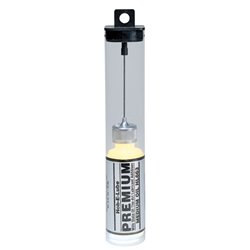
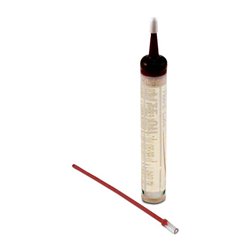
Hob−E−Lube Lite Oil
Price: £ 11.25Hob−E−Lube Lite Oil Multi-viscosity oil with an additive that reduces its...
Related posts
-
 Do I need a respirator?If you are using an aerosol spray paint you should always use one. Always read the manufacturer’s...
 - How to remove super glue (cyanoacrylate)?Cyanoacrylate is best known as super glue. The best way to remove it is with acetone or an acetone-based product...
- What is the best wood for baseboards?The most common wood for baseboards is probably chipboard as this is relatively inexpensive. Plywood is another...
- How do I stick parts together for a test fit?There are several trains of thought on the best way to secure parts together temporarily. Some suggest using a small...
- How to clean model railways track?There is of course the old tried and tested method, the track rubber which does the job, no railway modeller should...