Dry brushing is a painting technique where only a small amount of paint is administered to the model in order to...

Cart 0 Product Products (empty)
No products
Free shipping! Shipping
£ 0.00 Total
Product successfully added to your shopping cart
Quantity
Total
There are 0 items in your cart. There is 1 item in your cart.
Total products (tax incl.)
Total shipping (tax excl.) Free shipping!
Total (tax incl.)
Search Tips
Tips categories
Latest Tips
-
 What is dry brushing?Read more
 -
 What options do I have for motorising the waterwheel on a mill or the sails of a windmill?Read more
There are several options for motorising the waterwheel on a mill or the sails of a windmill on a model railway...
-
 Do I need to create a fiddle yard for my layout?Read more
A fiddle yard is an optional component of a model railway layout. It is essentially a hidden storage area where...
-
 Why is my river still tacky after a week?Read more
It sounds like you are using a clear two-part casting resin, which although very smelly when mixing and setting, is a...
-
 How do I paint realistic denim on figures?Read more
Painting realistic denim on your figures can elevate their appearance and add a touch of authenticity to your work....

What is dry brushing?
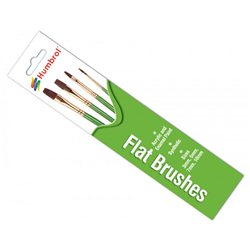
Dry brushing is a painting technique where only a small amount of paint is administered to the model in order to highlight raised areas.
You take your paint brush, dip it in the desired colour paint then remove the majority of the paint from the brush using the side of the paint pot, then wipe bristles in a piece of kitchen roll taking off more of the paint, then with a left to right flicking motion let the bristles flick over the model which will deposit a small amount of paint.
This process can be repeated until the desired affect is achieved.
Click here to receive the tips weekly in your mailbox. You can unsubscribe at any time.
Related products
Related posts
-
 Do I need to wash my plastic kit?I personally wash all my plastic kits, I use warm soapy water (Washing up liquid) and a light rub over with a nail...
 - Do I need to use a primer?For best results it is advisable to use a primer as this will stick to the plastic and give a uniform coat of paint...
- What is Milliput?Milliput is a two-part epoxy putty. There are two different colour rolls in a box when these are mixed together it...
- What is weathering?Weathering is a painting technique used by modellers to create the appearance of dirt and grime and even damage to...
- What modelling tools do I need to get started?Most modellers have an extensive tool kit, a tool for every eventuality. But when first starting a scalpel or a...