If you are planning a model railway layout then you are likely making some crucial decisions, one of which will be...

Cart 0 Product Products (empty)
No products
Free shipping! Shipping
£ 0.00 Total
Product successfully added to your shopping cart
Quantity
Total
There are 0 items in your cart. There is 1 item in your cart.
Total products (tax incl.)
Total shipping (tax excl.) Free shipping!
Total (tax incl.)
Search Tips
Tips categories
Latest Tips
-
 How much scenery should you have on a layout?Read more
 -
 Do I need expansion gaps on my railway layout?Read more
It is generally recommended to incorporate expansion gaps or expansion joints into your model railway layout,...
-
 Is acrylic paint safer than enamel paint?Read more
Acrylic paint is, without doubt, safer than enamel. This is because it is water-based so doesn't emit toxic fumes...
-
 What is the correct spacing to use between two parallel tracks in OO gauge?Read more
The distance between real parallel railway tracks can vary depending on the line speed, when the track was installed...
-
 Can I use water to thin acrylic paint?Read more
Yes, you can use water to thin acrylic paint as acrylic paint is a water-based paint. When you are using a brush to...

Can I use water to thin acrylic paint?
Yes, you can use water to thin acrylic paint as acrylic paint is a water-based paint.
When you are using a brush to paint your model, water is the best thing for the job.
When you are thinning your paint use just a small amount of water to start with, and add more to get the exact consistency that meets your requirements.
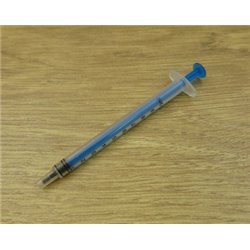
If you need to thin more paint in the future, it is a good idea to record the thinning ratio. The best way to achieve this is by using a syringe so you will get the same mix every time.
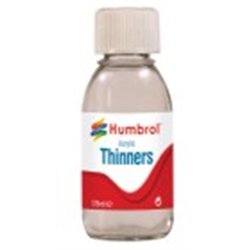
If you are using an airbrush it is best to use an acrylic thinner as the thinner helps the flow through the airbrush.
Posted in: Painting
Click here to receive the tips weekly in your mailbox. You can unsubscribe at any time.
Related products
Related posts
-
 Do I need to use a primer?For best results it is advisable to use a primer as this will stick to the plastic and give a uniform coat of paint...
 - What is weathering?Weathering is a painting technique used by modellers to create the appearance of dirt and grime and even damage to...
- How do I clean brushes used with enamel paint?Enamel paint is solvent based, so trying to wash in water will not work, you need to use white spirit. It is...
- How do I fill holes in a model?There are many products on the market for filling holes: There are plastic putties straight out of the tube, there...
- What is the best size paintbrush?This would depend on what you are painting as paint brushes come in various shapes and sizes. I would say for...