In my experience, stranded wire is preferable over solid wire. Stranded wire is more flexible than solid core wire,...

Cart 0 Product Products (empty)
No products
Free shipping! Shipping
£ 0.00 Total
Product successfully added to your shopping cart
Quantity
Total
There are 0 items in your cart. There is 1 item in your cart.
Total products (tax incl.)
Total shipping (tax excl.) Free shipping!
Total (tax incl.)
Search Tips
Tips categories
Latest Tips
-
 Is stranded wire better than solid wire?Read more
 -
 What is a tank wagon?Read more
A tank wagon or tanker is a type of railway wagon used specifically for transporting liquids or gasses.Tank...
-
 What is a dropper wire?Read more
When using a bus wire (shared common wire) to distribute power around your layout, you will inevitably have to tap...
-
 What is the difference between an up and down line?Read more
Generally speaking, an up line travels towards a major town or city and a down line away from it, on main lines in...
-
 How do I service my model railway locomotive?Read more
Servicing your model railway locomotive is an essential part of maintaining its performance and longevity. Regular...

How do I model railway container yards?
Modelling a railway container yard can really add character and realism to your layout. It's a great way to incorporate modern freight into your scene. Here’s a step-by-step guide to help you model an effective and detailed container yard:
1. Choose the Right Location on Your Layout
The first step is deciding where to place the container yard. A good location might be near a port, industrial area or freight terminal. Make sure you have enough space for the yard, as it will need to accommodate tracks, containers and handling areas.
2. Prepare the Base
The base of your container yard should be flat and level, simulating a hard-standing surface. If you're working with a board or foam base, cover it with a layer of fine gravel or sand to give it an industrial, concrete look. You can also use a textured mat that resembles concrete or asphalt for a more uniform finish.
- Tip: To create the feel of an urban, industrial environment, you might want to add cracks or weathering effects to the surface to make it look worn and used.
3. Trackwork
For the trackwork, a container yard is typically served by a set of parallel tracks with sidings to store the containers. Make sure to lay the tracks close together, as this will reflect the tightness of a real container yard where containers are stacked right next to the tracks.
- Use flexible track for curves and tight spaces. This will help you create a more realistic layout without the rigid constraints of sectional track.
- Pointwork is essential to allow shunting and switching of wagons. You might want to add some point motors for extra realism if you're going for operational functionality.
4. Adding Container Handling Areas
Now for the fun part – modelling the containers and their handling areas!
Containers: You can use ready-made model containers, which are widely available in a variety of scales. For a more custom look, you could build your own containers using plastic card and paint them in different company logos or faded colours. If you're modelling a more industrial feel, adding a few damaged or rusty containers can help add character.
Handling Equipment: Containers are typically loaded and unloaded by large gantry cranes, reach stackers or forklifts. Consider adding these to your scene to make it feel more alive. You can find models of container cranes in many model shops or you could kitbash a crane using plastic parts and accessories. Small details like container stacking rigs or cranes can really elevate the realism.
Container Stacking: When stacking containers, make sure to stagger them in a random, irregular manner, as this mimics the way they are stored in real life. You might want to stack them on flat cars or directly on the yard floor if you're going for a more detailed diorama effect.
5. Detailing the Yard
Small details will bring your container yard to life. Here's what to add:
Lighting: Container yards are often illuminated at night, so adding streetlights or yard lighting can really add realism. You can buy miniature street lights or use fibre optic cables to light the yard. Be sure to consider the lighting's placement to highlight key areas, such as the container stacking zones and handling equipment.
Cargo Handling Accessories: Add little touches like containers being loaded onto flat wagons, security fences and signs. You might also want to model the ground beneath the containers to include tyre marks, puddles or oil stains.
Roadways: Container yards have small internal roads for shunting vehicles to move containers around. You can use thin strips of card or self-adhesive road tape for this, adding markings and signs to make it look like a well-used, busy yard.
Fencing and Security: Most real container yards have fencing for security purposes. You can use fine wire mesh or plastic fences to enclose the yard, adding gates and access points for trucks to enter and exit.
6. Weathering and Ageing
Industrial areas, especially container yards, can get quite dirty over time. You can weather the containers, track and ground to make it look more realistic:
- Use weathering powders, acrylic washes, or even airbrushing to create rust, dirt and grime on containers and equipment.
- For the ground, adding weathering powders or paint to represent oil stains, dirt and wear can add realism to the scene.
- Don't forget the rails. A touch of rust around the rail ties or worn ballast can simulate a heavily used track.
7. Trains and Shunting
Finally, populate your container yard with freight trains and vehicles that help with loading/unloading. This includes wagons such as container flats, low-loaders, or even intermodal cars if you're modelling an international freight hub.
- Adding some small vehicles such as lorries or forklifts on the roads or near containers will give the scene a dynamic, operational feel.
By following these steps, you'll create a convincing, detailed container yard that'll be a standout feature on your model railway.
Posted in: Model Railway
Click here to receive the tips weekly in your mailbox. You can unsubscribe at any time.
Related products
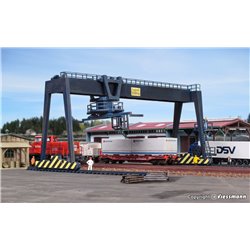
Container Crane
Price: £ 30.75Plastic kit of an N gauge Intermodal Container Crane. The kit requires...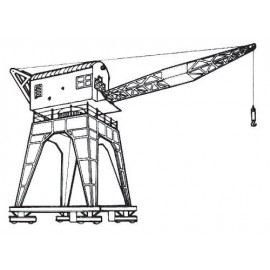
Travelling Dock Side Crane, HO/OO scale (Dapol...
Price: £ 11.60Travelling Dock Side Crane, HO/OO scale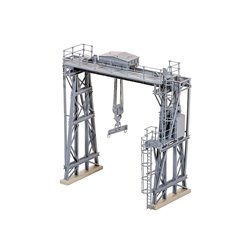
Overhead Traversing Crane
Price: £ 41.60Overhead Traversing Crane Moulded plastic parts that require gluing together....
Related posts
-
 What scale is Hornby?Hornby model railways are OO Scale or 1/76th that is 4 millimetres to the foot (12 inches). It runs on a track with...
 - How to weight my model so it does not tip?For wargaming figures, a small coin or washer glued to the under side of the base will usually to do the job. This...
- Is Bachmann compatible with Hornby?Yes, any OO scale loco, wagon or coach will work on any OO scale track, regardless of brand. Couplings are also...
- What are the model railway eras?According to Bachmann, as it states in their catalogue there are 9 eras. As they say in their catalogue this is not...
- Can a "DCC ready" train be used on analogue?Yes, you can use a DCC ready train on your analogue layout. DCC ready just means that the train has been factory...