How you attach trees really depends on the type of trees you are using. Many trees have wire forming the body of the...

Cart 0 Product Products (empty)
No products
Free shipping! Shipping
£ 0.00 Total
Product successfully added to your shopping cart
Quantity
Total
There are 0 items in your cart. There is 1 item in your cart.
Total products (tax incl.)
Total shipping (tax excl.) Free shipping!
Total (tax incl.)
Search Tips
Tips categories
Latest Tips
-
 How do I attach trees to a layout?Read more
 -
 What is the most effective way to create a section of tunnel in the landscape on my layout?Read more
Creating a section of tunnel in the landscape can add significant depth and interest to a layout. Here are some steps...
-
 What is scratch building?Read more
Scratch building is when you make a model "from scratch", just using raw materials and bits and pieces that you would...
-
 Where should I position semaphore signals on my layout?Read more
Semaphore signals are an important part of any model railway layout as they help to control the movement of trains...
-
 What is Hornby Dublo?Read more
Hornby Dublo was an early brand name for models produced by the company that we now all know as Hornby. The brand was...

How do I use a back to back gauge?
Using a back-to-back gauge for your model railway ensures that the wheels on your rolling stock are spaced correctly for reliable running on the track. Here’s how to use one:
Step-by-Step Guide
Understand the Gauge
A back-to-back gauge is a tool that measures the distance between the inner faces of the wheels on an axle. This distance is critical for smooth operation on points, crossings, and curves.Prepare Your Rolling Stock
- Place your rolling stock on a flat, stable surface or in a cradle to avoid damage.
- Ensure the wheels and axles are clean and free from debris.
Measure the Wheel Spacing
- Insert the back-to-back gauge between the wheels on the axle. The gauge should fit snugly without forcing it.
- If it slides in too easily or doesn’t fit, the spacing is incorrect.
Adjust the Wheels
- To correct the spacing, gently twist or push the wheels closer together or further apart on the axle. Use a wheel puller or a similar tool if required, especially for finer adjustments.
- Check frequently with the gauge until it fits perfectly.
Test on Track
- Once adjusted, test the rolling stock on a section of track, particularly on points and crossings, to confirm smooth operation.
Tips
- Always use a back-to-back gauge suited for your model railway's scale and track standard (e.g., OO gauge or N gauge).
- Regularly check all your rolling stock to prevent derailments and maintain smooth running.
- Consider investing in a high-quality gauge for accurate results.
Using a back-to-back gauge is a simple yet essential step for maintaining a reliable and enjoyable model railway.
Posted in: Troubleshooting
Click here to receive the tips weekly in your mailbox. You can unsubscribe at any time.
Related products
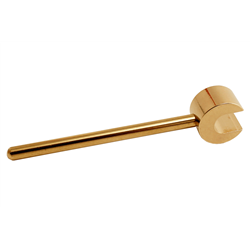
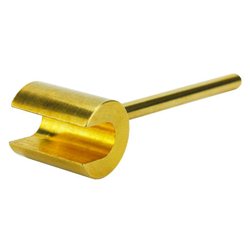
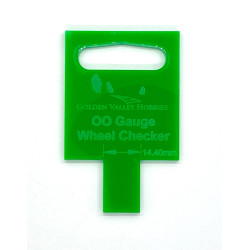
OO Wheel Gauge - Back to Back. 14.4MM
Price: £ 5.50OO Wheel Gauge - Back to Back. 14.4MM Scale: OO The Wheel Gauge checkes the...
Related posts
-
 How to remove super glue (cyanoacrylate)?Cyanoacrylate is best known as super glue. The best way to remove it is with acetone or an acetone-based product...
 - How to clean model railways track?There is of course the old tried and tested method, the track rubber which does the job, no railway modeller should...
- How to weight my model so it does not tip?For wargaming figures, a small coin or washer glued to the under side of the base will usually to do the job. This...
- What are ejector pins?Ejector pins are used in the injection moulding process of the manufacturing of plastic kits and die cast kits. They...
- How do I know if my knife is blunt?You will be able to feel the blade dragging and resisting as you draw the knife over what it is you are trying to...