Hand drills are used in modelling for intricate jobs where a power drill would not provide the delicacy, pace and...

Cart 0 Product Products (empty)
No products
Free shipping! Shipping
£ 0.00 Total
Product successfully added to your shopping cart
Quantity
Total
There are 0 items in your cart. There is 1 item in your cart.
Total products (tax incl.)
Total shipping (tax excl.) Free shipping!
Total (tax incl.)
Search Tips
Tips categories
Latest Tips
-
 What are the benefits of using a hand drill when modelling?Read more
 -
 How long does foam underlay last on average and is there any way to increase its longevity?Read more
The longevity of foam underlay can vary depending on a number of factors such as the quality of the foam, the...
-
 How can I add realistic tyre tracks to muddy terrain?Read more
Adding realistic tyre tracks to muddy terrain in your scale model can enhance the scene’s authenticity and tell a...
-
 In model railways, what is 2FS?Read more
In model railways, 2FS refers to 2mm Finescale or 2mm Scale Finescale. This is a specific modeling standard and scale...
-
 How do I attach figures to my layout?Read more
This depends on what type of figures you are using for your layout. If you are using white metal figures they often...

What is S scale?
The S scale denotes a ratio of 1:64. This scale signifies that one unit of measurement on the model corresponds to 64 units on the actual train or landscape it represents. Commonly known as "S gauge" in the UK, this scale offers a distinct balance between detail and size, making it a favourable choice among railway modellers. The appeal of the S scale lies in its ability to capture intricate details while maintaining a size that is not overly cumbersome, thus catering to a wide range of hobbyists.
Model railways in the S scale run on tracks with a gauge of 22.5 mm. This track gauge is specifically designed to align with the scale’s 1:64 ratio, ensuring that the proportions of the model trains and their tracks are both accurate and aesthetically pleasing. Enthusiasts appreciate the S scale for its realistic representation of trains and scenery, providing a more immersive and satisfying modelling experience. The scale's popularity has been growing, particularly among those who find the smaller HO scale models too minute and the larger O scale models too bulky.
One of the significant advantages of the S scale is its versatility. It strikes a middle ground between the smaller, more delicate HO scale (1:87) and the larger, more robust O scale (1:48). This versatility allows modellers to build detailed layouts without requiring an extensive amount of space, which can be a critical factor for those with limited room for their hobby. The S scale’s size is large enough to allow for the inclusion of fine details, such as realistic scenery and detailed train features, yet small enough to fit comfortably in most home environments.
In addition to its practical benefits, the S scale also fosters a strong community of enthusiasts who share tips, techniques, and support. Clubs and online forums dedicated to S scale modelling offer a wealth of resources for both novices and experienced modellers. The scale's blend of detail and manageability makes it an excellent choice for educational purposes as well, allowing younger hobbyists to engage with the intricacies of railway modelling. Ultimately, the S scale’s unique combination of detail, size, and community support ensures its place as a cherished and enduring choice in the model railway hobby.
Posted in: Model Railway
Click here to receive the tips weekly in your mailbox. You can unsubscribe at any time.
Related products
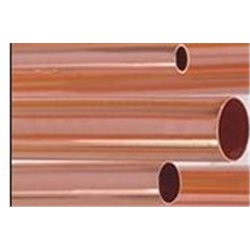
1/16 in. copper tubing (1.58 mm) - pack of 3
Price: £ 4.50Pack of 31/16 in. copper tubing (1.58 mm)
Related posts
-
 What scale is Hornby?Hornby model railways are OO Scale or 1/76th that is 4 millimetres to the foot (12 inches). It runs on a track with...
 - How to weight my model so it does not tip?For wargaming figures, a small coin or washer glued to the under side of the base will usually to do the job. This...
- Is Bachmann compatible with Hornby?Yes, any OO scale loco, wagon or coach will work on any OO scale track, regardless of brand. Couplings are also...
- What are the model railway eras?According to Bachmann, as it states in their catalogue there are 9 eras. As they say in their catalogue this is not...
- Can a "DCC ready" train be used on analogue?Yes, you can use a DCC ready train on your analogue layout. DCC ready just means that the train has been factory...