Hand drills are used in modelling for intricate jobs where a power drill would not provide the delicacy, pace and...

Cart 0 Product Products (empty)
No products
Free shipping! Shipping
£ 0.00 Total
Product successfully added to your shopping cart
Quantity
Total
There are 0 items in your cart. There is 1 item in your cart.
Total products (tax incl.)
Total shipping (tax excl.) Free shipping!
Total (tax incl.)
Search Tips
Tips categories
Latest Tips
-
 What are the benefits of using a hand drill when modelling?Read more
 -
 How long does foam underlay last on average and is there any way to increase its longevity?Read more
The longevity of foam underlay can vary depending on a number of factors such as the quality of the foam, the...
-
 How can I add realistic tyre tracks to muddy terrain?Read more
Adding realistic tyre tracks to muddy terrain in your scale model can enhance the scene’s authenticity and tell a...
-
 In model railways, what is 2FS?Read more
In model railways, 2FS refers to 2mm Finescale or 2mm Scale Finescale. This is a specific modeling standard and scale...
-
 How do I attach figures to my layout?Read more
This depends on what type of figures you are using for your layout. If you are using white metal figures they often...

What is the LMS Coronation Class?
The LMS Coronation Class, also known as the "Duchess" class, was a series of express passenger steam locomotives built by the London, Midland and Scottish Railway (LMS) between 1937 and 1948. Designed by Sir William Stanier, these locomotives were among the most powerful and fastest steam engines in the UK, primarily used for hauling long-distance express services on the West Coast Main Line. A total of 38 LMS Coronation Class locomotives were built during this period.
Key features of the LMS Coronation Class include:
- Streamlined Design: Early models featured an iconic streamlined casing, aimed at reducing air resistance and enhancing speed. This sleek, Art Deco-inspired design made them visually distinctive.
- Power and Performance: With a 4-6-2 "Pacific" wheel arrangement, these locomotives were capable of pulling heavy trains at high speeds, often exceeding 100 mph.
- Service History: They were initially used on prestigious services such as the "Coronation Scot" from London to Glasgow. Post-war, they continued to serve on various important routes until the end of steam on British railways.
Overall, the LMS Coronation Class is remembered for its contribution to the golden age of steam rail travel in the UK, combining engineering excellence with striking aesthetic design.
Posted in: Rolling stock
Click here to receive the tips weekly in your mailbox. You can unsubscribe at any time.
Related products
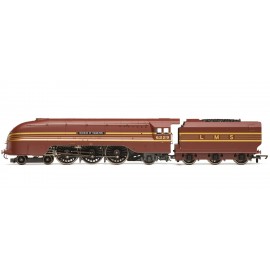
Coronation Class 4-6-2 Maroon with gold stripes...
Price: £ 139.99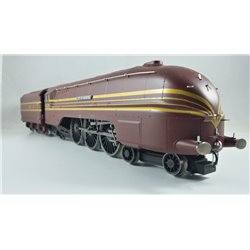
Hornby Coronation Class 6239 'City of Chester'...
Price: £ 95.00Hornby Coronation Class 6239 'City of Chester' in LMS livery 00 gauge (used)...
Related posts
-
 How to weight my model so it does not tip?For wargaming figures, a small coin or washer glued to the under side of the base will usually to do the job. This...
 - Is Bachmann compatible with Hornby?Yes, any OO scale loco, wagon or coach will work on any OO scale track, regardless of brand. Couplings are also...
- What are tension lock couplings?Tension lock couplings are the standard couplings for model trains in the UK. These are the ones we all know from...
- How do I test the width between the wheels of my engines?The best way to check the wheels of your locomotives is to use a tool called a back to back gauge. They are...
- How do I clean the wheels of my engine?One easy way is to get yourself a Peco cleaning kit containing a wire brush, wheel scraper, foam cradle and oil. The...