A DCC (Digital Command Control) decoder serves several important functions for controlling and operating model trains...

Cart 0 Product Products (empty)
No products
Free shipping! Shipping
£ 0.00 Total
Product successfully added to your shopping cart
Quantity
Total
There are 0 items in your cart. There is 1 item in your cart.
Total products (tax incl.)
Total shipping (tax excl.) Free shipping!
Total (tax incl.)
Search Tips
Tips categories
Latest Tips
-
 How do DCC decoders control model trains and accessories?Read more
 -
 What is a Gibbet Crane?Read more
The term Gibbet is most commonly associated with the kind of gallows-like structure used to hang people, but thanks...
-
.jpg "Do I need signals on my layout?") Do I need signals on my layout?Read more
Do I need signals on my layout?Read moreThe purpose of signals is to let the driver know if there was another train on the line, pretty much the same as...
-
 What are shunting signals?Read more
Shunting signals are a type of railway signal that are commonly found in sidings and alongside regular signals. They...
-
 Where on my layout would I use a turntable?Read more
A turntable is a device that enables locomotives and/or rolling stock to change direction or orientation. It consists...

At what age can my child start building kits?
Starting scale modelling can be a wonderful and educational hobby for children. The appropriate age to start largely depends on the complexity of the models and the child's individual skills and interests. Here are some general guidelines:
5-7 Years Old: At this age, children can start with simple snap-together kits. These kits do not require glue or advanced skills, making them a good introduction to the hobby. Supervision is still needed to ensure they don't lose small parts or become frustrated.
8-12 Years Old: Children in this age range can start working with more detailed kits that might require glue and paint. They can handle more complexity and have better fine motor skills. Adult supervision and assistance might still be required, especially for handling sharp tools or small, delicate parts.
13 Years and Older: Teenagers can generally work independently on most scale models, including those requiring more advanced techniques and tools. They can understand and follow detailed instructions, use precision tools safely, and have the patience for more complex projects.
Consider the following when deciding if your child is ready:
- Interest and Patience: Does your child show a genuine interest in the hobby and the patience to sit and work on detailed projects?
- Fine Motor Skills: Does your child have the dexterity to handle small parts and tools safely?
- Supervision and Safety: Are you available to supervise and assist as needed, especially with the use of potentially dangerous tools like craft knives?
Starting with simpler models and gradually moving to more complex projects as your child's skills and interest grow is often the best approach. This ensures they remain engaged and do not get frustrated, making the experience enjoyable and rewarding.
Posted in: Kit building
Click here to receive the tips weekly in your mailbox. You can unsubscribe at any time.
Related products
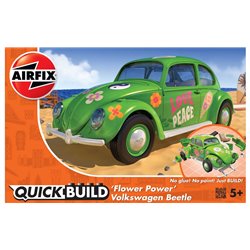
QUICKBUILD VW Beetle 'Flower Power'
Price: £ 16.50A quick-build model of a Classic VW Beatle (Flower Power version). Quickbuild...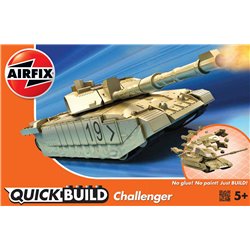
QUICKBUILD Challenger Tank Desert
Price: £ 14.99A quick-build model of an iconic Challenger Tank in desert colours....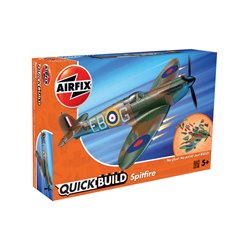
QUICKBUILD Spitfire for beginner
Price: £ 14.99QUICKBUILD Spitfire for beginner No glue! No paint! Just BUILD!
Related posts
-
 Do I need to wash my plastic kit?I personally wash all my plastic kits, I use warm soapy water (Washing up liquid) and a light rub over with a nail...
 - What is Milliput?Milliput is a two-part epoxy putty. There are two different colour rolls in a box when these are mixed together it...
- What modelling tools do I need to get started?Most modellers have an extensive tool kit, a tool for every eventuality. But when first starting a scalpel or a...
- How do I remove parts from the sprue?The short answer is carefully. The best way is with a sprue and plastic cutter but always be mindful of exactly...
- Do I need a cutting mat?It is not essential to have a cutting mat, but it is a good idea. It saves getting in trouble with your significant...