The removal of flash from a model is known as deflashing. This is usually carried out either by an operative at the...

Cart 0 Product Products (empty)
No products
Free shipping! Shipping
£ 0.00 Total
Product successfully added to your shopping cart
Quantity
Total
There are 0 items in your cart. There is 1 item in your cart.
Total products (tax incl.)
Total shipping (tax excl.) Free shipping!
Total (tax incl.)
Search Tips
Tips categories
Latest Tips
-
 How to remove flash on a model?Read more
 -
 What types of plants do I need on my layout?Read more
When it comes to adding vegetation to your railway layout or diorama, there are a variety of options to consider to...
-
 Why do my trains keep coming off the track?Read more
There are many reasons for derailments most of which can be remedied at the track laying stage of building your...
-
 What are the advantages of a motorised track cleaner?Read more
A motorised track cleaner can provide several advantages when it comes to maintaining a model railway layout,...
-
 What is the purpose of idler wheels on a tank?Read more
The purpose of idler wheels on a tank is to support the track and maintain its tension. Idler wheels are located at...

What is BR sectorisation?
"BR sectorisation" refers to the reorganisation period starting in 1982 when British Rail restructured its operations into distinct sectors. Each sector was responsible for specific types of services, aiming to boost efficiency and accountability by decentralising management and operations. Here’s what you need to know:
- InterCity - This sector handled long-distance passenger services. If you love modelling sleek, fast trains, InterCity is perfect for you.
- Network SouthEast - This managed commuter services in the South East of England. Think bustling commuter trains and busy stations.
- Regional Railways - Focused on local and regional passenger services outside the South East. Perfect for showcasing quaint country stations and regional services.
- Railfreight - Dedicated to freight transport, divided further into sub-sectors like Railfreight Distribution, Railfreight Coal, and Railfreight Construction. This is ideal if you enjoy modelling industrial scenes and heavy goods trains.
Sectorisation offers you a vibrant and varied era to recreate. During this time, British Rail moved away from the standard blue and grey livery to more colourful and sector-specific schemes, making your layout visually striking and authentic.
By incorporating the distinctive liveries and branding of each sector, you can bring a new level of detail and realism to your model railway. Whether you prefer the speed of InterCity trains, the hustle of Network SouthEast, or the industrial might of Railfreight, BR sectorisation gives you plenty of exciting options to explore.
Posted in: Model Railway
Click here to receive the tips weekly in your mailbox. You can unsubscribe at any time.
Related products

Railfreight/Depart.Grey - Enamel Pot
Price: £ 3.5015ml jar - Railfreight/Depart.GreyWe have this paint in stock however we...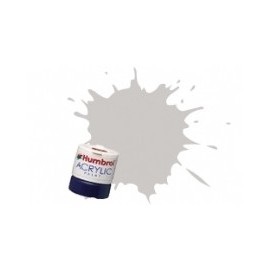
Related posts
-
 What scale is Hornby?Hornby model railways are OO Scale or 1/76th that is 4 millimetres to the foot (12 inches). It runs on a track with...
 - How to weight my model so it does not tip?For wargaming figures, a small coin or washer glued to the under side of the base will usually to do the job. This...
- Is Bachmann compatible with Hornby?Yes, any OO scale loco, wagon or coach will work on any OO scale track, regardless of brand. Couplings are also...
- What are the model railway eras?According to Bachmann, as it states in their catalogue there are 9 eras. As they say in their catalogue this is not...
- Can a "DCC ready" train be used on analogue?Yes, you can use a DCC ready train on your analogue layout. DCC ready just means that the train has been factory...