It goes back to the old saying: you get what you pay for. The more expensive locomotives out there have slightly...

Cart 0 Product Products (empty)
No products
Free shipping! Shipping
£ 0.00 Total
Product successfully added to your shopping cart
Quantity
Total
There are 0 items in your cart. There is 1 item in your cart.
Total products (tax incl.)
Total shipping (tax excl.) Free shipping!
Total (tax incl.)
Search Tips
Tips categories
Latest Tips
-
 How much should I spend on a locomotive?Read more
 -
 What is a DVT in modern passenger railways trains?Read more
A DVT stands for "Driving Van Trailer" in railways. Some key points about DVTs:They are railway carriages that...
-
 Why are ships' hulls painted red beneath the waterline?Read more
Painting ships' hulls red beneath the waterline serves a specific purpose and has been a longstanding tradition in...
-
 How can I power accessories if I have no suitable auxiliary port?Read more
If you don't have an auxiliary port on your controller, but want to power some accessories, what can you do?If...
-
 How can I best build a compact N gauge layout ?Read more
Building a compact N gauge layout can be a rewarding and challenging project. N gauge is a popular choice for those...

What are the different ways to apply washes when painting scale models?
As any seasoned modeller will tell you, using washes is an essential technique for adding depth, shading and realism to your scale models and miniatures. But have you experimented with different application methods beyond a standard brush-on wash? Let's review the pros and cons of brushing, dipping and spraying your washes.
The brush-on method
This is probably the most common and traditional way to apply a wash. Using a flat or round brush, you manually paint the wash into the recessed areas and along panel lines. The main advantages are precise control over placement and the ability to stipple the wash into tight spaces. However, it can be time-consuming on models with lots of nooks and crannies. There's also the risk of unsightly brush strokes or tide marks if not applied with a deft hand.
The dipping method
The dipping method involves...well...dipping your entire model into a bath of wash solution and letting capillary action do its magic. Favoured by wargaming painters, this technique quickly shades every crack and crevice. It's fast, low-effort and great for batch painting ranks of infantry models. That said, you do sacrifice some control over exactly where the shading ends up. It can also leave areas looking severely mucky if not properly rinsed and cleaned up afterwards.
Spraying
While less common than brushing or dipping, spraying offers another option for quickly applying an even wash coating across your model's surfaces. You'll need a spray bottle or an airbrush and the appropriate thinned wash mixture. Done well, spraying can effectively tone down a vibrant basecoat into a more natural, muted shade. However, you'll want to be careful about overspray and pooling - a spray starter set is recommended for best results. Some also argue that spraying doesn't provide the same control and placed shading as typical brush techniques.
No matter which method you use, practicing your wash application on test models is highly recommended before applying to your centrepiece project. Each has its own advantages for different types of models and modelling styles. Why not try out all three and find what works best for you?
Posted in: Painting
Click here to receive the tips weekly in your mailbox. You can unsubscribe at any time.
Related products
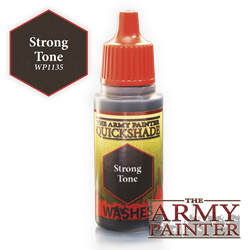
Acrylic quickshade strong tone ink
Price: £ 3.00Acrylic quickshade strong tone ink Ideal for adding extra shading, touching...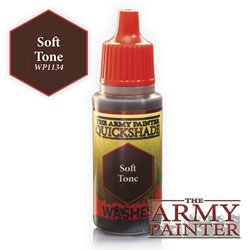
Acrylic quickshade soft tone ink
Price: £ 3.00Acrylic quickshade soft tone ink Ideal for adding extra shading, touching up...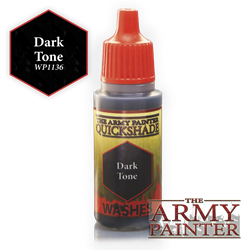
Acrylic quickshade dark tone ink
Price: £ 3.00Acrylic quickshade dark tone ink Ideal for adding extra shading, touching up...
Related posts
-
 Do I need to use a primer?For best results it is advisable to use a primer as this will stick to the plastic and give a uniform coat of paint...
 - What is weathering?Weathering is a painting technique used by modellers to create the appearance of dirt and grime and even damage to...
- How do I clean brushes used with enamel paint?Enamel paint is solvent based, so trying to wash in water will not work, you need to use white spirit. It is...
- How do I fill holes in a model?There are many products on the market for filling holes: There are plastic putties straight out of the tube, there...
- What is the best size paintbrush?This would depend on what you are painting as paint brushes come in various shapes and sizes. I would say for...